The Pixels Are White: Where Are Black Designers in Digital Fashion’s $89 Billion Future?
Look—let me tell you something nobody’s saying out loud.
The digital fashion revolution? The metaverse? NFT wearables selling for thousands of dollars?
It’s the same old game with new graphics.
The global fashion metaverse market, valued at $7.1 billion in 2023, is projected to reach $89.6 billion by 2032 Dress24h. That’s real money. New wealth. Digital ownership that could actually build generational assets for communities that have been systematically excluded from traditional fashion’s gatekeepers.
But walk through Decentraland’s Metaverse Fashion Week. Scroll through the biggest NFT fashion drops. Check who’s designing the virtual wearables selling for five figures.
Gucci. Louis Vuitton. Prada. Dolce & Gabbana.
The same names that dominated physical fashion for a century are now claiming the digital future before Black designers even get in the door.
And that? That’s intentional.
The Numbers That Tell the Real Story
As of 2024, 21 of the top 50 global fashion brands have launched NFTs, with sportswear brands leading this digital shift Business of Fashion.
Sounds revolutionary, right?
Except here’s what they won’t tell you: According to a 2024 report by Vogue Business, more than 42% of luxury fashion houses have introduced NFT-based campaigns ND Labs.
Notice what’s missing from that stat? Black-owned luxury fashion houses.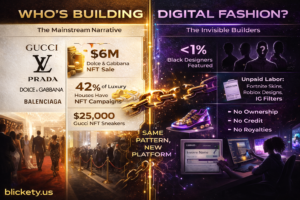
Because while the technology theoretically democratizes access—anyone with design software and an Ethereum wallet can mint an NFT—the infrastructure, the platforms, the communities, the capital? All controlled by the same people who’ve been excluding Black designers from traditional fashion for decades.
Dolce & Gabbana’s Collezione Genesi NFT collection generated over $6 million in sales DappRadar. One drop. Six million dollars. For digital versions of clothes you can’t even wear outside a computer screen.
Meanwhile, Black designers are still fighting for $50,000 loans to keep their physical studios open.
What Digital Fashion Actually Is (And Why It Matters)
Before we go further, let’s get clear on what we’re talking about.
Digital fashion = Clothing that exists only as computer files. Designed in 3D software. Worn by avatars in virtual worlds or overlaid on photos using AR.
NFT fashion = Digital clothing secured on the blockchain as a non-fungible token, proving ownership and authenticity.
Phygital fashion = A physical item paired with a digital NFT twin, giving buyers both the real-world garment and its virtual equivalent.
Metaverse fashion = Wearables designed for specific virtual worlds like Decentraland, Roblox, Fortnite.
Why does this matter?
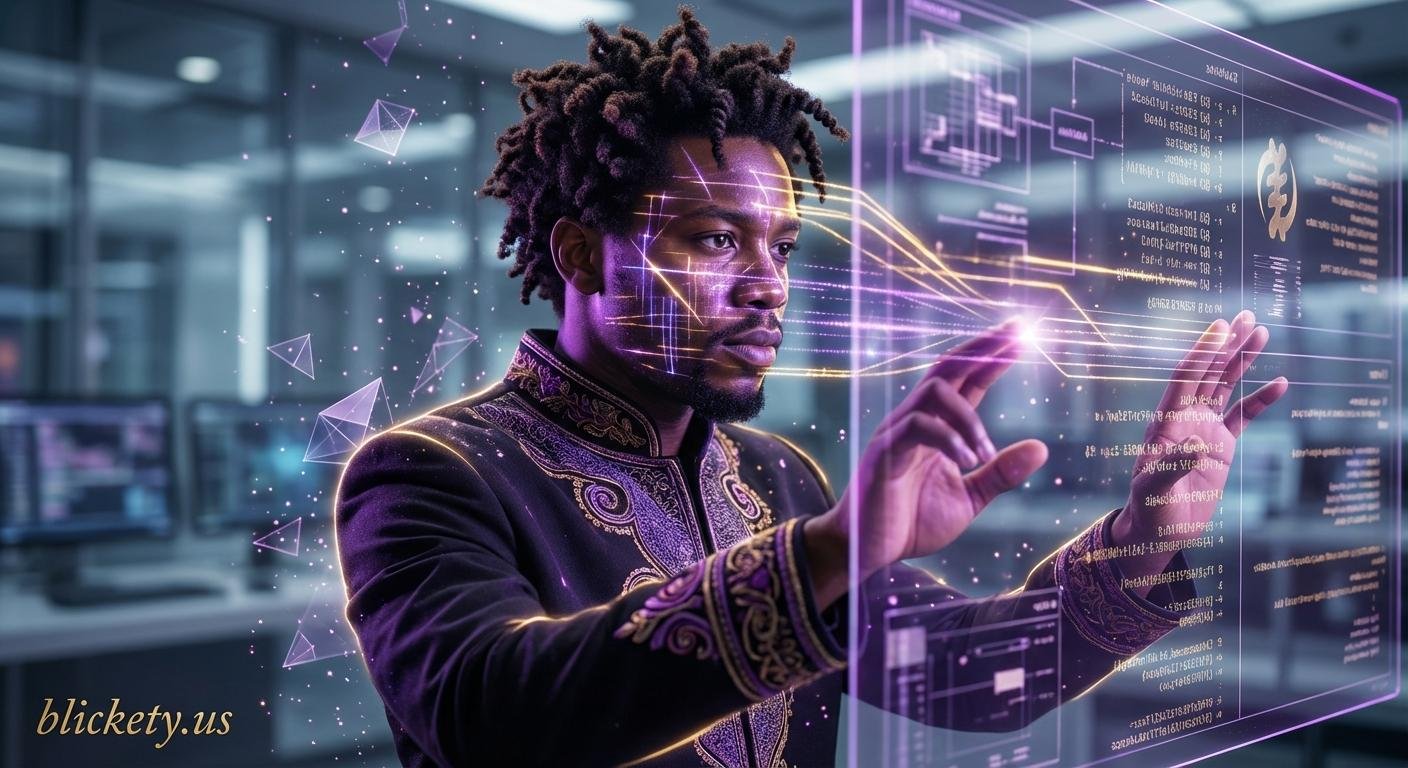
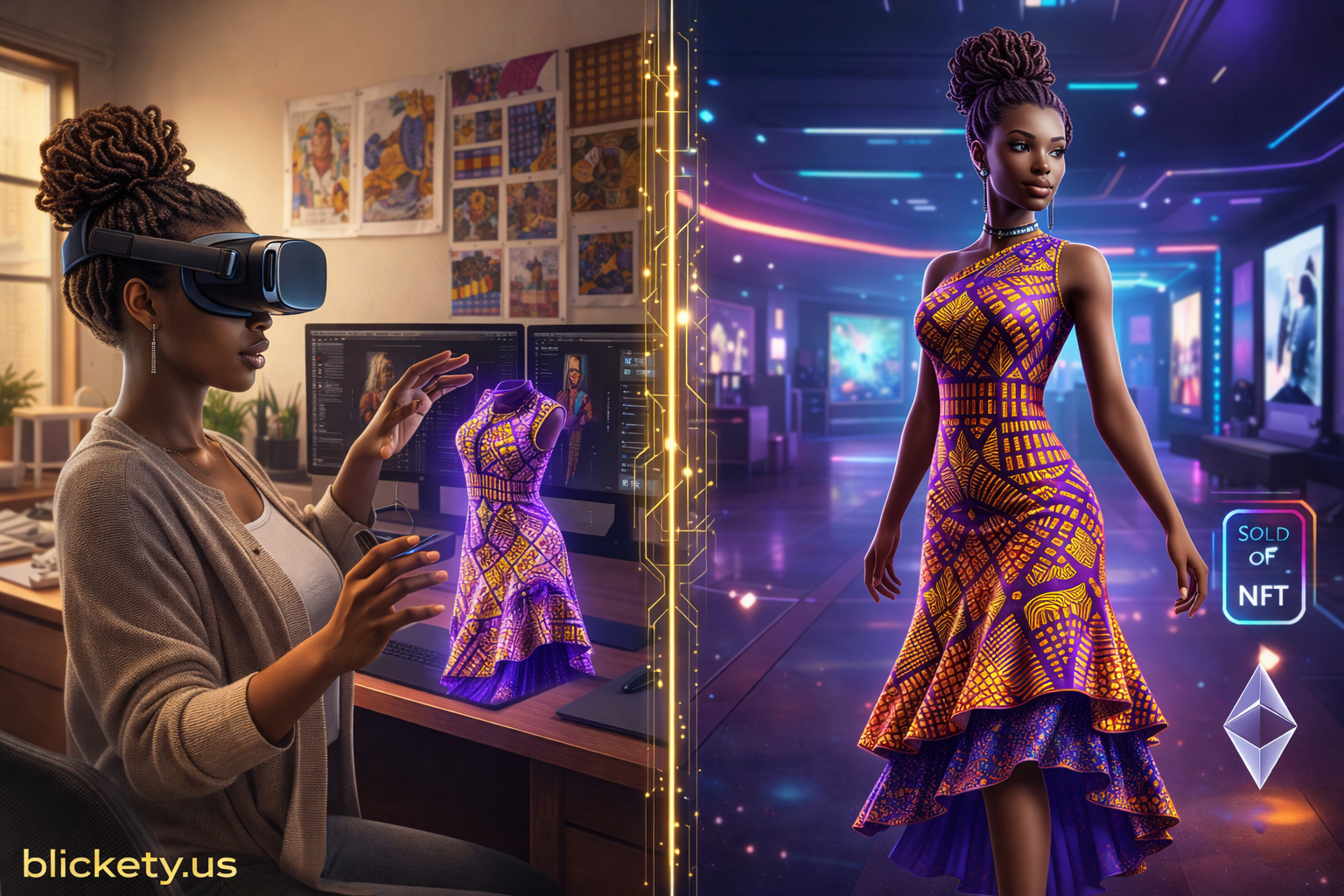
Because unlike physical fashion—which requires factories, materials, shipping, retail space—digital fashion theoretically removes all those barriers. A designer in Lagos or Detroit or Kingston can create a digital garment, mint it as an NFT, and sell it globally for thousands of dollars.
No factories in China.
No minimum order quantities.
No begging buyers at department stores.
No fashion week gatekeepers deciding who’s “in.”
Just design software, blockchain access, and talent.
This should be the great equalizer.
So why isn’t it?
The Infrastructure They’re Not Telling You About
Here’s the dirty secret about “democratized” digital fashion:
The platforms aren’t neutral.
NFTs are often platform-specific, limiting their use across metaverses Dress24h. Design something for Decentraland? Might not work in Roblox. Create for The Sandbox? Won’t necessarily port to Fortnite.
And who decides which platforms matter? Who gets featured at Metaverse Fashion Week? Whose NFTs get promoted on OpenSea?
The same tastemakers, influencers, and capital gatekeepers who’ve always controlled fashion.
Then there’s the cost barrier:
- Design software (CLO3D, Blender, Gravity Sketch): $50-$700/month subscriptions
- NFT minting fees: Unit cost of minting NFTs ranges from $0.015 to $150 depending on the blockchain MDPI
- Marketing to get visibility: Thousands in social media advertising
- Networking access: You need to be in Discord servers, Twitter spaces, crypto conferences
Black designers are already operating with less capital than their white counterparts in physical fashion. Now we’re supposed to jump into a space that requires crypto knowledge, blockchain fluency, 3D design skills, and the same social capital that’s always excluded us?
Where the Black Designers Actually Are
Look—it’s not that Black designers aren’t creating in digital spaces.
They’re just not being seen.
While Gucci was selling NFT sneakers for $25,000, Black designers were:
- Creating custom skins for Fortnite avatars (uncredited)
- Designing virtual outfits for Roblox (no royalties)
- Making AR filters on Instagram (unpaid labor)
- Building entire aesthetic movements (uncompensated)
The labor is there.
The creativity is there.
The innovation is there.
What’s missing is ownership, credit, and compensation.
This is the pattern we’ve seen forever: Black culture creates, white capital profits.
From jazz to rock to hip-hop to streetwear—we invent it, they monetize it.
Digital fashion looked like it might be different.
Turns out? Same game, new pixels.
The Opportunity (If We Move Fast)
Here’s the thing though—the space is still young enough that we can claim territory.
Nike’s acquisition of RTFKT wound down operations in January 2025 Business of Fashion, proving even big players don’t have this figured out yet.
The NFT market faced a downturn in 2022-2023, with average token prices dropping 92% Dress24h, which means we’re not late to a bubble—we’re entering during a reset when real builders separate from hype chasers.
The infrastructure for Black digital fashion designers exists—it just needs to be built by us, for us.
What That Looks Like: 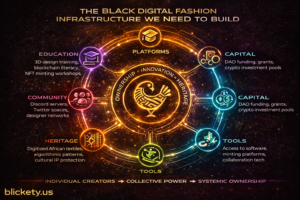
1. Black-Owned Digital Fashion Platforms
We need our own marketplaces, our own metaverse spaces, our own NFT platforms where Black designers are centered, not tokenized.
2. Education & Access
Free or low-cost training in 3D design software, blockchain technology, NFT minting. Not just “how to” but “how to own.”
3. Collective Bargaining
Black designers forming DAOs (Decentralized Autonomous Organizations) to pool resources, share knowledge, negotiate with platforms collectively.
4. Heritage Digitization
Traditional African textiles, patterns, techniques translated into algorithmic designs. Kente as generative art. Adinkra symbols as NFT collections. Not appropriation—innovation rooted in ownership.
What You Can Do Right Now
If you’re a designer:
- Learn 3D design (start with free Blender tutorials)
- Study how NFTs work (opensea.io is your classroom)
- Connect with other Black digital creators (Twitter/X spaces, Discord servers)
- Start small—create one digital piece, mint it, learn the process
- Document everything—your IP matters, protect it
If you’re not a designer but want to support:
- Buy from Black digital fashion creators when you can
- Amplify their work on social media
- Educate yourself on how this space works so you can spot exploitation
- Push platforms and metaverses to feature Black designers prominently
- Demand representation in digital fashion media coverage
The Real Talk
Digital fashion could be revolutionary for Black designers.
No material costs. No geographic limitations. Global reach. Programmable royalties that pay you every time your design resells.
But only if we build the infrastructure ourselves.
Because luxury brands didn’t wait for permission to claim the metaverse.
They saw the opportunity and moved.
We need to move faster.
Not asking to be included in their spaces.
But building our own.
Because the future of fashion isn’t just virtual—it’s ownership.
And Black designers have always understood that better than anyone.
We just need to code it into the blockchain this time.
Want to learn more about Black designers in digital fashion? Follow the-afrofuturist.com for ongoing coverage of Web3, NFTs, and the future of Black ownership in virtual spaces.