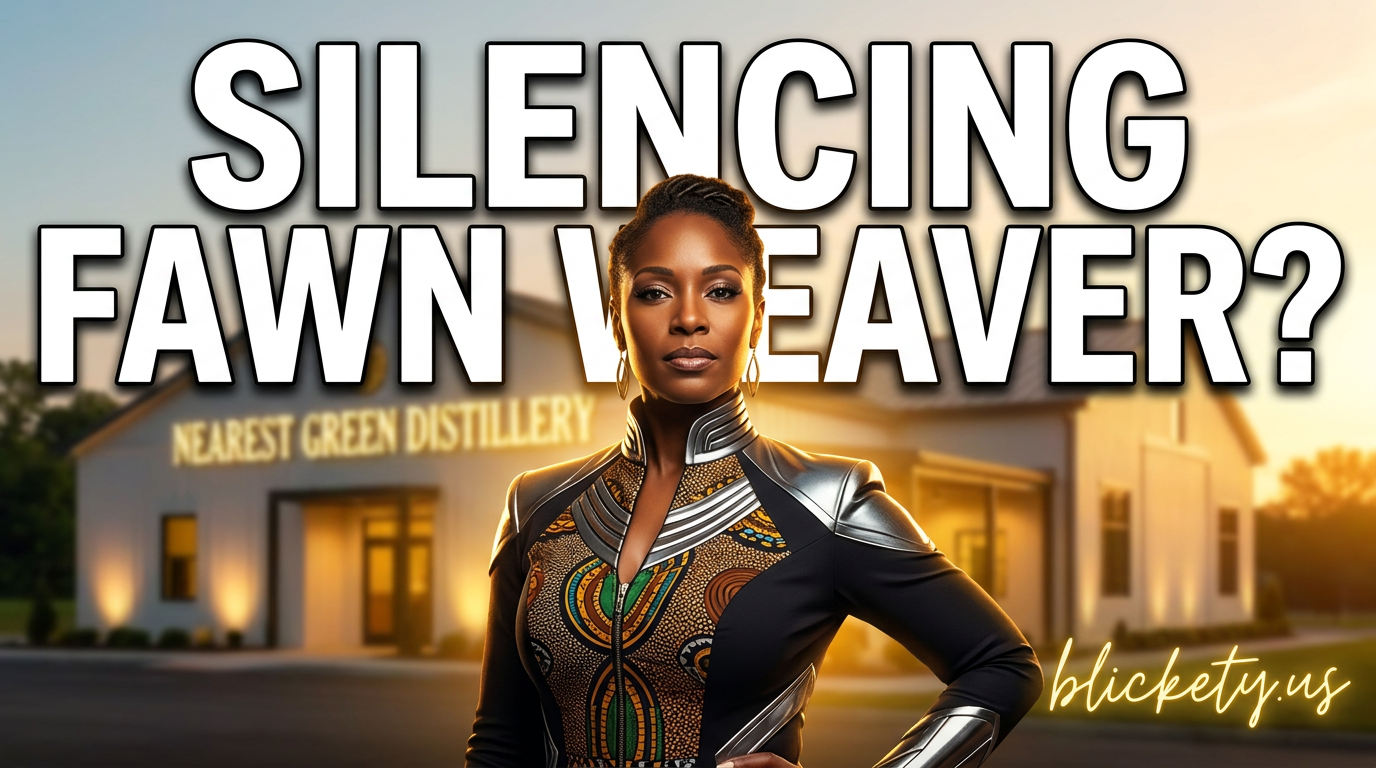
Uncle Nearest Gag Order: Receiver Seeks to Silence Fawn Weaver After Bankruptcy Chaos and ‘Widespread Confusion’
The Uncle Nearest gag order fight just entered a new and sharper phase. Court-appointed receiver Phillip G. Young Jr. filed a formal motion in U.S. District Court for the Eastern District of Tennessee this week asking Judge Charles Atchley to prohibit founder Fawn Weaver from making any public statements about the ongoing case.
The Uncle Nearest gag order request came days after Weaver filed unauthorized Chapter 11 bankruptcy petitions on behalf of three company entities. A federal bankruptcy judge promptly dismissed all three. Then Weaver launched a social media campaign declaring the entire receivership finished.
The receiver says the fallout was immediate, measurable, and costly. The brand that carries the name and memory of the first known Black master distiller in American history is now at the center of a legal war over something deeper than debt — the right to control the story, and whether the woman who built it is allowed to speak at all.
What the Receiver Is Actually Asking For
Young’s motion doesn’t just ask the court to quiet things down a little. He wants Judge Atchley to formally prohibit Weaver, her husband Keith Weaver, and their affiliated entity Grant Sidney from discussing the case publicly, on social media, or with any employees, vendors, distributors, creditors, investors, or shareholders connected to the company. The Lynchburg Times That’s a broad sweep. Practically speaking, if granted, it would shut down her Instagram updates, her website’s “Follow The Case” portal, and any direct contact with the people inside the company she built.
The argument isn’t purely procedural. Young argues that financial penalties alone are insufficient to stop Weaver from interfering with the receivership process. The Lynchburg Times So he’s reaching for the next instrument available: a court order treating her public speech as active harm to the estate.
The Uncle Nearest gag order, if granted, wouldn’t just affect Weaver personally. It would silence Grant Sidney’s press releases, Keith Weaver’s statements, and any coordinated communication that flows through their network. Whether Judge Atchley goes that far is still to be decided.
The Bankruptcy Filing That Sparked It All
The specific trigger was March 17, 2026. That morning, Weaver posted a video to Instagram opening with a declaration that the receivership of Uncle Nearest was finished — done, concluded, over. A press release from Grant Sidney, Inc., Weaver’s private investment firm and Uncle Nearest’s largest shareholder, amplified the same message across distribution channels. The Lynchburg Times Within hours, Young filed an expedited sanctions motion calling what followed a deliberate and willful violation of the court order that placed him in charge.
The dispute came down to a narrow but decisive legal question: who holds the authority to file bankruptcy petitions on behalf of a company already operating under court-ordered receivership? U.S. Bankruptcy Judge Suzanne Bauknight ruled on March 19 that Weaver was not authorized to file the petitions she submitted, finding that the receivership order vested those powers exclusively in the receiver. TheStreet Three days after the Instagram announcement, a federal judge had thrown out every petition Weaver filed.
Her legal team pushed back. Attorney Kelli D. Holmes argued that nothing in the relevant section of the receivership order explicitly barred anyone other than the receiver from initiating such filings. TheStreet Bankruptcy court disagreed. The filings were dismissed. The receivership order held.
Uncle Nearest Gag Order: A Pattern, Not a First
This isn’t the first time the Uncle Nearest gag order has been contested territory — not even close. The case has cycled through public vs. courtroom tension since the beginning. Judge Atchley imposed an original gag order back on August 11, 2025, freezing public statements from both sides as the receivership proceedings opened. Americanwhiskeymag Weaver operated around the edges almost immediately, posting Instagram videos that acknowledged the restriction while still mobilizing supporters to “clear the shelves.”
By October, she declared the gag order fully lifted — technically, a temporary agreed order had expired, though the court’s broader stance on public commentary had not shifted to an open green light. Baller Alert Late-night February videos discussed financial data, court testimony, and the receiver’s billing rate. Then in early March, Young filed a motion arguing that Weaver had openly discussed the case at a CIAA conference in Baltimore, acknowledging she had intentionally violated a non-disclosure agreement related to cash flow projections. AfroTech
The Uncle Nearest gag order issue the receiver is now pressing isn’t built on a single incident. It’s constructed from months of a founder doing what founders do — speaking about their company — inside a legal framework that says she no longer holds that authority.
The Real-World Fallout: Employees, Vendors, and Buyers
Young’s case for the Uncle Nearest gag order rests on concrete documented harm. Dozens of employees, vendors, creditors, distributors, and potential buyers contacted the receiver seeking clarification about the company’s status within hours of Weaver’s posts. At least one prospective asset purchaser paused their work on a pending transaction. At least one senior employee resigned, citing the confusion as their primary reason for leaving. Distributor payments were delayed. The Lynchburg Times
Young estimates the disruption cost the receivership hundreds of thousands of dollars. Brand damage on top of that is harder to put a number on.
That last part — brand damage — is where the situation turns genuinely complicated. Fawn Weaver built this company on the power of her storytelling. The whiskey’s origin, the recovery of Nearest Green’s erased legacy, the awards, the distillery in Shelbyville welcoming more than 200,000 visitors annually — all of it was amplified through her voice. Now the receiver is arguing that same voice is the company’s largest liability. It’s a collision this case was probably always heading toward.
Fawn Weaver’s Counter: A New York Lawsuit and a Book in Progress
Weaver hasn’t been passive while the Uncle Nearest gag order motion moves through the courts. Through Grant Sidney, the Weavers filed suit against Farm Credit Mid-America in the Supreme Court of the State of New York, alleging the lender ran a deliberate smear campaign by circulating false claims about missing inventory, financial misconduct, negative cash flow, and insolvency. TheStreet The lawsuit seeks damages on five counts including defamation and tortious interference.
Her team’s argument is direct. Weaver stated that the bank knew the accusations were false when they circulated them, and that those accusations were designed to strike at the credibility that allowed the brand to grow against significant industry odds. The Spirits Business Farm Credit has not filed a formal response in the New York case.
Meanwhile, Weaver is documenting everything. She announced in February that the proceedings are being recorded for an upcoming book, tentatively titled The Attempted Heist of Uncle Nearest — already positioning it as her third New York Times bestseller. Whether the Uncle Nearest gag order, if granted, would reach a future book is a question the courts haven’t answered. It’s the kind of question that could end up defining how far judicial silence orders can actually extend.
The Nearest Green Foundation Beneath All of This
It’s worth pausing here to remember what this brand was actually built on. Uncle Nearest Premium Whiskey exists because Fawn Weaver encountered an article about Nearest Green — an enslaved man who taught Jack Daniel the art of whiskey distilling and is now recognized as the first known African American master distiller in U.S. history Evrim Ağı — and refused to let his name stay buried any longer.
That origin isn’t decorative. It’s load-bearing. Weaver raised capital, built a state-of-the-art distillery, won industry awards, and put a Black man’s name on bottles in liquor stores across America. The ancestors who built lasting value under systems designed to extract and erase them are not a metaphor here — they are the literal business model, the founding story, the marketing engine.
That context doesn’t dissolve the legal questions. Courts don’t adjudicate legacy. But it does complicate any clean narrative that frames this only as a story about a founder who mismanaged debt. What’s also happening is a reckoning about who controls a Black legacy once it becomes worth something to the institutions that finance American commerce. The Uncle Nearest gag order is one instrument in that larger reckoning — and what it means for the founder’s right to tell her own story is not a small thing.
What Happens Next
The Uncle Nearest gag order motion is now before Judge Atchley, who has demonstrated consistent willingness to enforce court orders when he believes they’ve been violated. The receivership order, first issued in August 2025, vested the receiver with exclusive authority over the company’s officers and directors — a position the court has reinforced through multiple subsequent rulings. Billionaires.Africa
Weaver’s side retains significant legal resources. The New York defamation case against Farm Credit is in its earliest stages and could run parallel to the Tennessee proceedings for months. Young has indicated the goal is to conclude the entire receivership process by mid-2026, through either a refinancing of the debt or an outright sale of the company. Taste Select Repeat That timeline is now complicated by the bankruptcy dispute, the Uncle Nearest gag order fight, the New York litigation, and an ongoing sanctions motion — all running simultaneously.
The brand itself keeps operating. Bottles are still moving. The distillery in Shelbyville is still open. Nearest Green’s name is still on the label. The question of who controls what that name means — and who holds the right to speak for the company that carries it — remains unresolved. Whatever the court decides about the Uncle Nearest gag order, the deeper battle over ownership, legacy, and the right to tell your own story is far from over.
Continue the journey with our feature on Black‑Owned Haircare Brands Making History — including how Courtney Adeleye does it twice.