Table of Contents
- The Fire That Was Always There
- Nigerian Diaspora South Africa Xenophobia: What Actually Happened in KuGompo
- The Man at the Center — and What His Title Actually Means
- Nigerian Diaspora South Africa Xenophobia: The Pattern Nobody Wants to Name
- The Ubuntu Contradiction
- What the Advisory Actually Said — and What It Didn’t
- Nigerian Diaspora South Africa Xenophobia and the Question of African Unity
- The Sovereignty Argument Both Sides Are Missing
- FAQ
The Fire That Was Always There

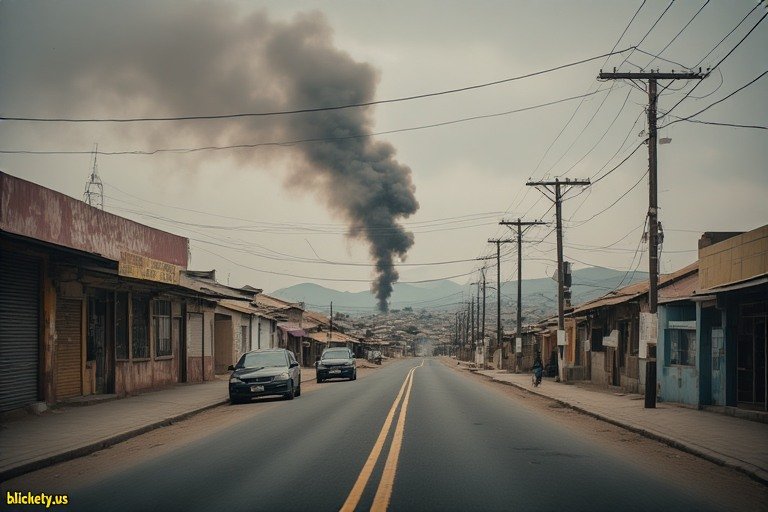
On March 30, 2026, a march in KuGompo — the Eastern Cape port city most of the world still calls East London — started peaceful and turned ugly fast. Ten vehicles set alight. Shops looted, some owned by South Africans, most by foreign nationals. A diplomat from Nigeria’s high commission in Pretoria was moved to apologize publicly the following day. The Nigerian High Commission issued a 10-point advisory telling its citizens to limit movement, avoid public gatherings, suspend all socio-cultural activities, and — the line that should stop every reader cold — “refrain from unnecessary ostentation and flamboyance.”
Read that last one again. A government telling its people not to appear too visible. Too successful. Too present.
That advisory is not a safety communication. It is, in plain language, a request that Nigerian citizens in South Africa make themselves smaller in order to survive. The Nigerian diaspora South Africa xenophobia crisis has a history stretching back to 1998, and that history has produced the same response from the same institutions every time: condemnation, apology, advisory, silence. Then fire. Then condemnation again.
Afro-Futurism is, at its core, a refusal to accept that the fires of the past are the permanent condition of the future. So this is not just a news story. It is an accountability question, directed at everyone on the continent who believes in the project of African solidarity — and who needs to reckon honestly with why that project keeps failing the people most in need of its protection.
Nigerian Diaspora South Africa Xenophobia: What Actually Happened in KuGompo
Nigeria’s high commission in South Africa urged its citizens there to be cautious following an anti-illegal immigration protest in Eastern Cape province that turned violent. On Monday, activists were holding a peaceful march in the port city of KuGompo — formerly East London. Disorder erupted after a protester said he was attacked by a foreigner, prompting demonstrators to damage several vehicles and shops. Yahoo!
That’s the wire version. Here’s what sits underneath it.
The protest was organised by members of ActionSA, one of South Africa’s political parties, who described the installation of Solomon Eziko as a violation of the province’s sovereignty and constitutional order. Nigerian Eye Demonstrators included civil society groups, political parties, and traditional leaders. Traditional leader Xhanti Sigcawu, who was present at Monday’s march, told broadcaster Newzroom Afrika the installation ceremony had left local chiefs feeling “undermined” as the area was the “territory of the Xhosas.” Yahoo!
The KuGompo protest turned violent after the properties of Nigerians and other foreigners in the region were destroyed. Protesters accused foreign nationals of taking jobs meant for South Africans, increasing criminal activities, and placing pressure on already-strained public services — concerns that come at a time when South Africa continues to battle high unemployment and a rising cost of living. Pulse Nigeria
The South African authorities, including KuGompo mayor Princess Faku, condemned Monday’s trouble, which saw 10 vehicles set alight and local and foreign-owned shops looted. “We supported the march because it is part of the efforts of defending our sovereignty but cannot condone violence. Violence doesn’t solve problems… it’s very sad that such an important march was turned into violence and chaos,” Faku said. No arrests have been made. Yahoo!
No arrests. Worth sitting with that.
The Man at the Center — and What His Title Actually Means
The Nigerian diaspora South Africa xenophobia explosion this week has a specific trigger, and it is worth understanding precisely — because the mischaracterization of what happened is itself part of the problem.
A fortnight ago, Solomon Ogbonna Eziko was recognised as the “Eze Ndi Igbo East London” by members of the local diaspora. Installing an “Eze Ndi Igbo” is a common practice among Igbos living away from home. The Igbo people, prominent in Nigeria’s south-east, are one of the country’s largest ethnic groups and are prominent in the diaspora. While members of the Igbo community in KuGompo have recognised Eziko as their leader, his title is ceremonial and has no political meaning or cultural significance outside his community. Within the grouping, he is recognised as a mediator in minor disputes and is invited to local ceremonies. Yahoo!
A community appointing a mediator for internal disputes. An elder to invite to ceremonies. That is what set ten vehicles on fire.
In response, the Nigerian High Commission denied any involvement in or approval of the purported coronation, describing the claims as misleading. “The High Commission wishes to state, unequivocally, that, contrary to the narrative in the public domain, no coronation took place and none intended,” the mission said. It emphasised that Nigeria respects South Africa’s sovereignty, laws, and traditional institutions. Sahara Reporters
The Igbo diaspora has appointed Eze Ndi Igbo community leaders in cities across the world — London, Houston, Toronto, Lagos itself. This is a practice rooted in the Igbo tradition of maintaining communal governance and dispute resolution wherever the people settle. It is not a territorial claim. It is not a political maneuver. It is a community maintaining its own continuity across distance. That is not a violation of South African sovereignty. It is what diaspora communities do to survive.
What happened in KuGompo was not a response to a genuine threat. It was a response to visibility.
Nigerian Diaspora South Africa Xenophobia: The Pattern Nobody Wants to Name
The Nigerian diaspora South Africa xenophobia crisis did not begin in 2026. It has a documented history that most coverage treats as a series of isolated incidents. It is not.
In 2008, at least 62 people were killed in a xenophobic uprising. In 2015, another nationwide spike in xenophobic attacks against immigrants prompted a number of foreign governments to begin repatriating their citizens. Wikipedia Then 2017. Then 2019. In September 2019, sporadic violence targeting African foreign nationals and their businesses broke out in Durban, Pretoria, Johannesburg, and surrounding areas, leaving 12 people dead, thousands displaced, and businesses wantonly looted. More than 600 people were arrested on various charges related to public violence. Human Rights Watch
Following the September 2019 incident, Nigeria boycotted the World Economic Forum conference in Cape Town, recalled its ambassador, and evacuated Nigerians from South Africa. Some South African enterprises in Nigeria were also targeted. Rujmass Diplomatic crisis. Apologies. A memorandum of understanding signed in 2013 specifically to prevent further attacks. Advisory after advisory. And then, as reliably as the seasons change, another city, another march, another fire, another advisory telling Nigerian citizens not to be too visible in the country where they live and work and build lives.
A Pew Research poll conducted in 2018 showed that 62% of South Africans expressed negative sentiment about foreign nationals living and working in South Africa, believing that immigrants are a burden on society by taking jobs and social benefits. 61% of South Africans thought that immigrants were more responsible for crime than other groups. There is no factual evidence to substantiate the notion that immigrants are the main culprits of criminal activity in South Africa. The Washington Post
62% harboring negative sentiment. No factual basis. No arrests after the violence. No prosecution after 2008. No prosecution after 2019. The pattern is not just in the attacks. The pattern is in the impunity.
The fire that keeps returning is not a weather event. It is a policy failure wearing the costume of popular frustration.
The Ubuntu Contradiction
Here is the thing that should haunt anyone who cares about Black futures on this continent.
Ubuntu — the Nguni Bantu philosophical concept foundational to South African post-apartheid identity — translates most simply as “I am because we are.” It is the animating idea behind the Truth and Reconciliation Commission. It is the philosophical core of Nelson Mandela’s vision for what a free South Africa could become: a nation whose own suffering under a system of exclusion and dehumanization had made it permanently incapable of inflicting that same suffering on others.
And yet.
Contrary to expectations, after majority rule in 1994, the incidence of xenophobia increased. Academic Audie Klotz states that following South Africa’s transition to democracy in 1994 a new “non-racial xenophobia” has emerged in the country that has specifically targeted refugees. Wikipedia The people who burned those ten vehicles in KuGompo on March 30, 2026, are the children and grandchildren of people who survived apartheid. Who were supported by the entire African continent — by Nigerian oil money, by Zimbabwean solidarity, by Mozambican sanctuary — during the liberation struggle. Who built their freedom on the principle that no human being should be made to feel foreign in their own humanity.
And today a Nigerian man installs a ceremonial community leader and the response is arson.
The Nigerian diaspora South Africa xenophobia crisis is not, at its root, about immigration policy. It is about what happens to a people’s philosophy when economic abandonment fills the space where solidarity used to be. Apartheid did not only steal land and labor and freedom. It stole the future the land was supposed to support. South Africa’s unemployment rate hovers around 33%. Youth unemployment is over 60%. The ANC’s post-liberation promise of economic dignity has not arrived for the majority of Black South Africans. And into that vacuum of undelivered futures, the oldest political tool in the playbook gets inserted: find a scapegoat. Make them foreign. Make them visible. Make them the reason your suffering continues.
The ancestors who fought apartheid knew that tactic intimately. It was used against them.
What the Advisory Actually Said — and What It Didn’t
The Nigerian High Commission issued a 10-point advisory to Nigerians residing in South Africa. The high commission urged Nigerians to be security-conscious at all times, moderate their movement, and limit interaction with unfamiliar persons. It advised citizens to maintain a low profile, remain law-abiding, and respect local laws and customs. Nigerian Eye
The Commission also urged Nigerians to be vigilant and adopt safety measures, including limiting movement, avoiding unfamiliar individuals, and refraining from indulging in unnecessary ostentation and flamboyance. Nigerians were directed to suspend all socio-cultural activities and steer clear of demonstrations or counter-protests. Sahara Reporters
What the advisory does not say: that the Nigerian government will pursue diplomatic consequences if its citizens are attacked. That it will demand arrests. That it will condition the bilateral relationship between Abuja and Pretoria on the protection of Nigerian lives. That the pattern of violence followed by impunity followed by advisory followed by silence is unacceptable and will not be accepted again.
What it says instead is: be smaller. Be quieter. Don’t be seen.
This is not a criticism of Nigerian diplomatic staff, who are operating within the real constraints of a relationship both governments have economic interests in maintaining. It is an observation about what “protecting citizens abroad” actually means when the tools available are advisory circulars rather than enforceable accountability. The Nigerian diaspora South Africa xenophobia crisis will not end with a 10-point advisory. It will end when the cost of violence against Nigerians in South Africa becomes higher than the political benefit of tolerating it — and right now, that calculus has not shifted.
Nigerian Diaspora South Africa Xenophobia and the Question of African Unity
There is a conversation that the African Union, the Economic Community of West African States, and every pan-African institution needs to have — and has been avoiding since at least 2008.
There are about 3.6 million migrants living in South Africa, a country of more than 50 million. Most migrants are from Zimbabwe, Mozambique, or Lesotho. The Nigerian population is estimated at roughly 2% of foreign-born residents. The Washington Post Nigerians are not the largest immigrant group in South Africa. They are among the most visible — because of economic success, because of cultural confidence, because of the Igbo tradition of building community institutions wherever they settle. That visibility has consistently made them a target. The African Union officially condemned the 2019 violence. Nothing changed.
The uncomfortable truth is this: the Nigerian diaspora South Africa xenophobia pattern is not an aberration from the African unity project. It is evidence that the African unity project has not been built with enough structural force to protect Black Africans moving within Black Africa. The free movement protocols in various African regional blocs remain aspirational in many cases, unenforced in most, and entirely absent as a mechanism of accountability when a member state’s citizens are attacked in another member state’s territory.
The continent celebrated Mandela’s freedom and built a mythology of African solidarity around his story. But solidarity that doesn’t protect the Igbo man in KuGompo, the Zimbabwean shopkeeper in Johannesburg, the Mozambican worker in Cape Town — that solidarity is a speech, not a structure.
Our ancestors understood that freedom without infrastructure is just a different kind of captivity. The people who walked out of Robben Island walked into a country whose economy was still structured to exclude them. And now the excluded are doing to their African neighbors what was done to them. The cycle is not inevitable. It is a choice — made repeatedly, without consequence, in the absence of structures powerful enough to interrupt it.
The Sovereignty Argument Both Sides Are Missing
The Xhosa chiefs who felt “undermined” by Solomon Eziko’s installation have a real concern, poorly expressed through violence. Traditional authority in South Africa’s Eastern Cape is a living institution with real meaning for real communities. The idea that a foreign national would be given any kind of leadership title in territory the Xhosa people have stewarded for generations touches something legitimate about belonging, about whose land this is, about what sovereignty means at the community level.
That concern deserved a conversation. It deserved a meeting. It deserved the kind of dialogue that Ubuntu was supposed to make possible.
Instead it got fire.
And the Igbo community in KuGompo has its own legitimate claim — the claim of every diaspora people to maintain cultural continuity, to appoint their own mediators, to keep their traditions alive in the places where they have built lives. The Eze Ndi Igbo tradition is practiced on every continent where Igbo people have settled. It is not a territorial claim. It is an act of cultural preservation. Solomon Eziko’s title carries no political authority outside his own community. His role is mediator, elder, ceremonial presence. That is not sovereignty. That is survival.
Both communities are trying to hold onto something real. What they do not have — what nobody has built for them — is a framework for that conversation. A structure within which Xhosa traditional leaders and Igbo diaspora leaders could sit together, under the auspices of the city or the province or the nation, and negotiate what coexistence actually looks like. Not tolerance. Coexistence. The kind that requires both parties to see each other as fully human, with fully legitimate claims, and to work out the terms of sharing space.
The Nigerian diaspora South Africa xenophobia cycle will continue until that framework exists. And that framework will not be built by advisory circulars or diplomatic apologies. It will be built by political will — on both sides, at every level, with consequences attached. On the strength, South Africa, in common decency and being the great nation it is, will no doubt be fair and understanding in resolving this issue once and for all. In the meantime the Nigerians are getting their hands on. Peep it out.
The next question this series has to ask is the one South African economists and Nigerian foreign policy analysts have been dancing around for years: what would it actually cost, in bilateral trade, in investment, in regional standing, for South Africa to implement real accountability for anti-immigrant violence? The number might be smaller than the silence suggests. We’re running the calculation next.
FAQ
What happened in KuGompo on March 30, 2026? An anti-immigration march in KuGompo, Eastern Cape turned violent after a protester claimed he was attacked by a foreigner. Demonstrators set 10 vehicles alight and looted shops, some owned by South African nationals and others by foreign nationals. The march was organised by civil society groups and political parties including ActionSA, triggered by the recent recognition of Solomon Ogbonna Eziko as the “Eze Ndi Igbo East London” by the local Igbo diaspora community.
What is an Eze Ndi Igbo? An Eze Ndi Igbo is a ceremonial community leader appointed by Igbo diaspora communities wherever they live. The title is a common practice among Igbos living away from home. The role involves mediating minor disputes within the community and attending local ceremonies. The title carries no political authority, no territorial claim, and no significance outside the community that appoints it.
What did the Nigerian High Commission advise? The Nigerian High Commission issued a 10-point advisory urging Nigerian citizens to limit movement, avoid public gatherings, suspend all socio-cultural activities, maintain a low profile, avoid making inflammatory statements on social media, and refrain from counter-protests. Citizens were also advised to avoid “unnecessary ostentation and flamboyance.”
Has this happened before? Yes — repeatedly. Major episodes of xenophobic violence targeting Nigerian and other African nationals in South Africa occurred in 1998, 2008, 2013, 2015, 2017, and 2019. The 2019 attacks left 12 dead and resulted in the repatriation of over 600 Nigerians by the Nigerian government.
Were any arrests made? As of April 1, 2026, no arrests had been made in connection with the KuGompo violence.
What is the Nigerian diaspora South Africa xenophobia pattern? It is a recurring cycle: economic frustration and political scapegoating of foreign nationals → violent attacks → diplomatic condemnation → apology and advisory → impunity → silence → repeat. The Nigerian diaspora South Africa xenophobia pattern has continued uninterrupted for nearly three decades without a structural intervention capable of breaking it.