Black-Owned Haircare Brands and the Blueprint: How Courtney Adeleye Made History Twice at Walmart
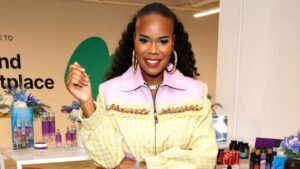
Black-owned haircare brands have been reshaping retail aisles for over a decade, but what happened when Courtney Adeleye walked into a Walmart and spotted two of her own creations on the same shelf — that was something different. That was a timestamp. A before-and-after. The kind of moment your grandmother would have said “write that down, baby” — because it had never happened before.
Not to a Black woman. Not to a Black man. Not to any Black person. Ever.
And she built the first one with five hundred dollars.
From Kitchen Table to $100 Million: The Origin of Black-Owned Haircare Brands Built Different
There’s a particular kind of alchemy that happens when necessity meets vision inside a Black woman’s kitchen. Courtney Adeleye — a Detroit native, University of Michigan graduate, and former nurse — started her journey not in a boardroom but in her own bathroom, mixing ingredients and documenting her hair growth journey online. Courtney Adeleye That documentation didn’t stay private for long.
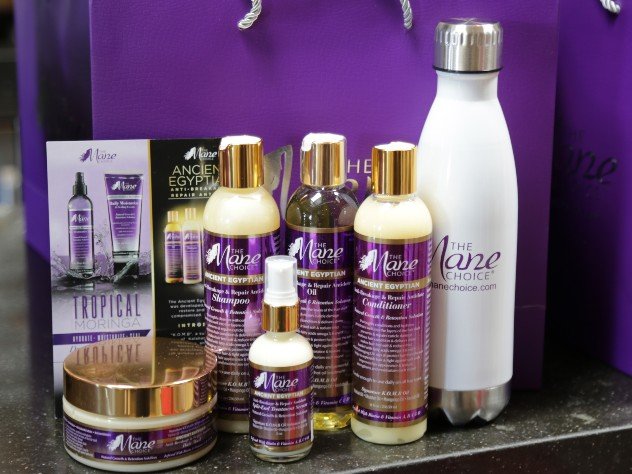
Viewers started writing in. They wanted whatever she was using. Around 2008 or 2009, she started experimenting with formulations at home, and by 2013, The Mane Choice had an official launch. Beauty Independent The market gap she identified wasn’t subtle — there weren’t many brands combining natural ingredients with targeted hair growth support at the same time. She didn’t wait for someone to fill it.
She used $500. Bottles, labels, ingredients — that was the whole budget. What began with that initial investment grew into a brand generating over $100 million in sales within six years, expanding from zero distribution to more than 60,000 retail doors — Walmart, CVS, Target, and other major retailers across the country. Courtney Adeleye
No private equity. No outside funding. Just the product, the community, and the compounding math of people trusting what they saw work in real time.
The ancestors who built with whatever was available — they would recognize this story.
The $61.5 Million Exit and Why It Mattered for Black-Owned Haircare Brands
By 2019, Adeleye sold The Mane Choice to MAV Beauty Brands for $61.5 million. WWD And here’s what that number actually means when you strip away the press release language: she owned 100% of it. No private equity carving out a percentage. No investor waiting for his payday before she got hers.
She went in for an assessment to see if the company was valuable — not planning to sell — and walked out having decided the time was right. Beauty Independent That’s what ownership does. It gives you options. Black-owned haircare brands that reach scale without giving up equity don’t just generate wealth — they generate agency. The ability to choose your own exit on your own timeline.
She chose.
And then she rested. Five years passed. The industry kept moving.
She was watching.
Watch & Sea: When Black-Owned Haircare Brands Go Back to the Ocean
The vision for Watch & Sea was rooted in a desire to bring the ocean’s healing power to everyone — blending extensive research with a commitment to products that truly make a difference. Watch & Sea Seaweed. Algae. Kelp. Sea kelp extract. These aren’t random choices. African cosmological tradition has always known what Western science is slowly rediscovering — water heals. The ocean remembers.

Watch & Sea launched with over 40 products spanning hair growth, styling, and beauty, including supplements, perfumes, body oil, an LED beauty mask, and The Flourishing Collection — a haircare line priced from $16.99 to $32.99. Yahoo! The brand covers both hair and skin, treating them as connected systems rather than separate categories — because, as Adeleye has said, if you understand hair science, skin science follows naturally.
The name itself carries intention. Watch & Sea is a challenge to every doubter who wondered whether she could build lightning twice. Just watch and see, she said. A statement of return, of confidence, of someone who has already proven the blueprint and is simply running it again — better, with more team, more infrastructure, more knowledge of what not to do. TheGrio
That’s not repetition. That’s mastery.
Dual Retail Presence: Why This Milestone Is Infrastructure, Not Just Achievement
Black-owned haircare brands fight for shelf space constantly. The fight is real — buyers who don’t understand the market, planograms that weren’t built with Black hair in mind, marketing budgets that can’t compete with legacy players. Getting one brand onto a major retailer’s shelves is a negotiation. Getting two is architecture.
Watch & Sea Beauty has rapidly expanded into Target, CVS, H-E-B, and Meijer, making science-backed beauty more accessible to communities nationwide. Courtney Adeleye And at Walmart, something historic crystallized — both The Mane Choice and Watch & Sea on the same shelves. Same founder. Two different chapters of the same vision.

Adeleye captured it herself in a video filmed at Walmart during Women’s History Month. Standing in the aisle, she pointed to The Mane Choice first — the brand she built, sold, and no longer owns — still there. Then Watch & Sea beside it. Her voice carried the weight of someone who understood exactly what they were looking at.
She stated plainly that this had never been done by an African-American woman. Had never been done by an African-American person. Period.
That’s not a boast. That’s a coordinate. A point on the map that didn’t exist before she put it there. Black-owned haircare brands now have a higher watermark — not because someone told them they could, but because Adeleye went and did it and left the footage.
Building During the DEI Rollback: Sovereignty Over Dependence
Here’s the part that gets glossed over in most coverage. Watch & Sea hit Target shelves at exactly the moment Target was announcing rollbacks of its DEI programs — alongside Amazon, Walmart, Meta, McDonald’s, and others scaling back or eliminating diversity commitments entirely. Yahoo!
Adeleye didn’t pretend that wasn’t happening. She said plainly that people had every right to be upset. She expressed her own disappointment. And then she said something that matters more than the disappointment — she wasn’t going to wait for corporate America to decide whether to empower her community. She would do it directly.
Her plan was to keep finding ways to support other entrepreneurs of color, regardless of what happened at the corporate level. TheGrio That’s the sovereignty logic. Build the infrastructure. Own the shelf space when you can. And when the institutions pull back, don’t freeze — pivot to direct community impact and keep building.
Black-owned haircare brands operating inside the current retail climate have to hold two truths at once: the shelves matter AND the shelves aren’t the ceiling. Adeleye is doing both. She isn’t the only Houstonian winning. Peep this alpha from another sister out in H-Tine.
The Lesson Encoded in the Legacy
Five hundred dollars to $100 million. A $61.5 million exit. Five years of deliberate rest and rebuilding. A second brand hitting retail with better infrastructure, better team, and more intentionality than the first. History made in a Walmart aisle during Women’s History Month.
This is what Black-owned haircare brands can do when the founder refuses to limit the scope of what’s possible. When the science background that built one formula builds another. When the community that bought the first product trusts the founder enough to buy the second. 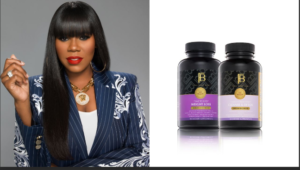
Accessibility is everything, Adeleye has said — the goal is to be in any and every store that sells haircare products. Beauty Independent That’s not ambition for its own sake. That’s understanding that Black women deserve to find their products everywhere, not just in specialty corners of stores that treat their hair as a niche market.
The ancestors built cities. Schools. Economies from rubble. The mission was always infrastructure — structures that outlast you, systems that serve the people who come after. Black-owned haircare brands at this level aren’t just commerce. They’re continuation. Bricks in something larger than any single product, any single sale, any single shelf.
Courtney Adeleye didn’t just make history. She drew a map.
Now someone else gets to follow it further.