A Travel Guide to the Tech Revolution They’re Not Telling You About
They told you Detroit was dead.
Abandoned factories. Vacant lots. The hollowed-out husk of what used to be America’s industrial crown jewel.
That’s the story you heard. The one they keep telling. The one that makes great disaster porn for cable news and poverty tourism think pieces.
But here’s what they’re not telling you:
Detroit is building the future.
Not from some corporate boardroom in Silicon Valley. Not from venture capital offices in Manhattan. From the ground up. With Black hands. From people who never left, who refused to abandon the city when everybody else did, who looked at empty factories and saw maker spaces, looked at vacant lots and saw opportunity, looked at a broken system and decided to build a new one.
This isn’t a comeback story.
This is a takeover.
And if you want to see what Black-led innovation actually looks like—not the sanitized, venture capital-approved version, but the real thing, the kind that builds wealth that circulates through communities instead of extracting from them—you need to get to Detroit.
Right now.
The Numbers They Don’t Want You to See
Let’s start with some facts that’ll mess up the narrative. 
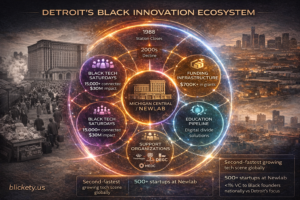
Detroit’s tech scene is the second-fastest growing in the world after Dubai City of Detroit. Not the second-fastest in America. In the world.
Black Tech Saturdays, launched in 2023, has connected over 15,000 Detroiters, generated $30 million in economic impact, and helped local founders secure over $10 million in funding Blackpulsehq. In less than two years.
In July 2025, Detroit launched the first-of-its-kind Detroit Startup Fund—a $700,000 initiative distributing grants to Detroit-based tech startups City of Detroit. Real money. Real support. Not promises. Not photo ops.
Newlab at Michigan Central has attracted more than 150 members from more than 25 companies, a third of which are led by founders who are underrepresented in tech Michigan Central. And collectively? These companies have raised more than $500 million in venture capital funding Michigan Central.
Still think Detroit’s dead?
Black Tech Saturdays: The Heartbeat
If you only do one thing in Detroit, make it a Saturday.
Black Tech Saturday.
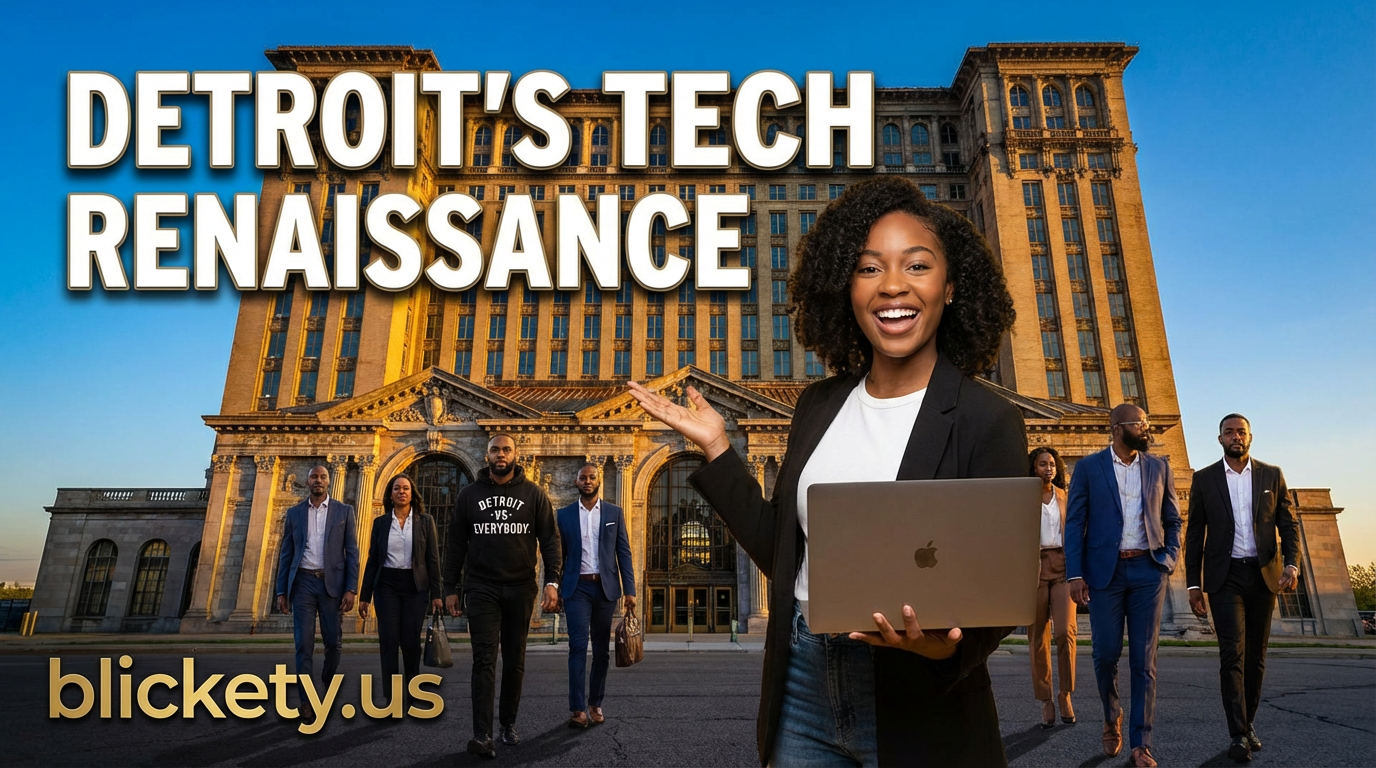
Picture this: It’s 9am on a Saturday morning. Most of America is sleeping off Friday night or scrolling through brunch options. But in Corktown, at Newlab inside Michigan Central Station—that iconic train depot that used to symbolize Detroit’s decline and now houses one of the most vibrant tech ecosystems in the country—something different is happening.
What started as a five-person gathering has exploded to 500+ attendee events in under two years BridgeDetroit.
This isn’t a networking event. This isn’t some corporate diversity initiative where they wheel out the same three successful Black founders to give inspirational speeches while nothing changes.
This is infrastructure.
Co-founders Alexa and Johnnie Turnage created Black Tech Saturdays as an economic mobility organization helping founders overcome barriers like access to capital—less than 1% of venture capital funding goes to Black and Brown founders Detroit Regional Chamber.
Every Saturday, founders pitch ideas. Investors write checks. Developers meet their co-founders. People who thought tech wasn’t for them realize it absolutely is. And the whole thing happens with an energy that feels less like Silicon Valley and more like a Black church revival crossed with a startup accelerator crossed with your cousin’s cookout where everybody’s got a side hustle and half of them are about to blow up.
What You’ll See:
- Live pitch competitions (real money on the line)
- Workshops on everything from AI to equity structuring
- Mentors who actually look like you and came from where you’re from
- Connections that turn into contracts, co-founders, capital
Pro tip: Show up early. These events fill up fast. And bring business cards. Real ones. You never know who you’re about to meet.
When: Every Saturday
Where: Newlab at Michigan Central, 2001 15th St, Detroit, MI 48216
Cost: Free (yes, actually free)
Website: blacktechsaturdays.com
Michigan Central & Newlab: Where Tomorrow Gets Built
Alright, let’s talk about the elephant in the room. Or more accurately, the absolutely massive, restored, architecturally stunning train station.
Michigan Central Station first opened in 1913 as one of the country’s most spectacular transportation terminals, designed by the same architects behind New York’s Grand Central Ford. It closed in 1988 and spent three decades as a symbol of Detroit’s decline—graffiti-covered, stripped for scrap, the kind of ruin that shows up in every “America’s failing cities” photo essay.
Then Ford bought it.
And instead of turning it into another soulless corporate campus, they did something wild: They created a 30-acre technology and cultural hub designed to inspire creative collaboration between established companies, universities, growing startups, youth initiatives, and community stakeholders Ford.
Translation: They built a place where everybody can play.
Newlab Detroit provides state-of-the-art prototyping equipment, workspaces, and acres of specially permitted pilot sites Newlab. You can build a drone here. Test autonomous vehicles. Prototype advanced manufacturing equipment. Run pilots that would take years to get permitted anywhere else.
And here’s the part that matters: Over half of the companies at Newlab have at least one founder from an underrepresented background Michigan Central.
This isn’t diversity as decoration.
This is Black folks building the actual infrastructure of the future.
What To Experience:
The Building Itself: Even if you’re not a tech person, the restoration alone is worth the trip. Floor-to-ceiling windows. Original Beaux Arts details. Spaces that feel like they’re bridging 1913 and 2113 at the same time.
The Pilot Projects: Detroit created a Transportation Innovation Zone in Corktown with a streamlined, adaptive permitting process designed to support cutting-edge technology ASCE. You can literally see autonomous shuttles being tested, electric roads charging vehicles while they drive, drones navigating overhead.
The Energy: This is what it feels like when innovation isn’t happening to a community but with it. The security guards know the founders by name. Local kids take coding classes in the same building where startups are raising millions. It’s integrated. It’s real.
Public Access: The station has public areas, a café, rotating art installations. You don’t have to be a member to visit. Just walk in like you belong there. (Because you do.)
Location: 2001 15th St, Detroit, MI 48216
Hours: Vary by area (public spaces generally 8am-6pm weekdays)
Tours: Available through Michigan Central’s website
The Neighborhoods: Where Black Ownership Never Stopped
Look—you can’t understand Detroit’s tech revolution without understanding the neighborhoods.
Because while the headlines focus on the shiny new buildings and the venture capital millions, the real story is happening in Grandmont Rosedale, on Livernois Avenue, in Black-owned businesses that have been here through the whole damn thing.
Livernois Avenue (“Avenue of Fashion”)
Detroit’s Black-owned businesses have been a mainstay for the metro Detroit area, cultivating community and boosting economic growth through their products, services, and programming TechTown Detroit.
Livernois is where you see that legacy in action. Black-owned boutiques that have been family businesses for generations sitting next to new cafés run by entrepreneurs in their twenties. Fashion. Food. Culture. All of it flowing.
Must-visits:
- Local boutiques carrying Detroit designers
- Soul food spots that have been feeding the neighborhood since before you were born
- New tech-focused co-working spaces popping up alongside legacy businesses
Corktown
This is where Michigan Central is. Where Newlab is. Where the tech energy is most concentrated. But it’s also one of Detroit’s oldest neighborhoods, and there’s tension here—the good kind that forces conversations about who gets to benefit from development, who gets displaced, who gets to build the future.
The Black Tech Saturdays crew is based here. Use that as your anchor.
Midtown
Home to TechTown Detroit, another major player in the startup ecosystem. The former Jefferson School in Midtown is being redeveloped into new headquarters for Invest Detroit and co-working space, with 20% of space reserved for emerging Detroit resident-owned businesses at below market rents City of Detroit.
That matters. Because gentrification is real, but so is intentional community development that keeps wealth circulating where it should.
The Support Infrastructure: How They’re Actually Building This
Detroit’s not just throwing money at tech bros and hoping something sticks.
There’s actual infrastructure. Organizations with track records. Systems built to circulate wealth through Black communities.
Black Leaders Detroit
Black Leaders Detroit provides 0% interest loans for Detroit businesses owned by people of African descent, with no hidden fees and flexible terms Blackleadersdetroit.
Zero percent.
Read that again.
This isn’t charity. This is what investment looks like when it’s designed to build wealth instead of extract it.
What they offer:
- No-interest capital for businesses
- Grants (unrestricted—you can use the money how you need to)
- Programs for residential developers building homes in Black communities
Website: blackleadersdetroit.org
Think Technologies
De’Lon Dixon’s Think Technologies bridges Detroit’s digital divide through AI-powered learning solutions, with a flagship product called UThink offering micro-courses on tools like ChatGPT, Google Analytics, and Canva—specifically designed for older adults and tech newcomers Blackpulsehq.
This is the kind of innovation that actually matters. Not another app for rich people to order overpriced sandwiches. But technology that gives people power.
ProsperUs Detroit
Community-focused lending that actually understands what small businesses need. ProsperUs offers loans up to $50,000 and works with community development groups that are on the ground and trusted Crain’s Detroit Business.
They get it: access to capital isn’t just about money. It’s about trust. Networks. People who understand where you’re coming from.
Where To Stay: Support Black-Owned
The Siren Hotel (Corktown)
Not Black-owned, but locally owned, and it’s right in the heart of everything. Walking distance to Michigan Central.
Foundation Hotel (Downtown)
Detroit-owned boutique hotel in a restored 1920s building.
Airbnb Strategy:
Search for Black-owned listings in Corktown, Midtown, or the neighborhoods near Livernois. Support local homeowners. Get the real Detroit experience.
Where To Eat: The Fuel
Detroit Soul (two locations)
Created in 2015 by Jerome Brown and Sam VanBuren, inspired by years of cooking meals with their family and summers in Selma, Alabama TechTown Detroit. This is soul food with actual soul. The kind that feeds more than your stomach.
Kuzzo’s Chicken & Waffles
Black-owned. Detroit institution. Get the chicken and waffles. Obviously.
Hancock Bar
Black-owned bar in Corktown. Perfect spot after a Black Tech Saturday event.
Good Cakes and Bakes
Black woman-owned bakery that’ll change your relationship with cake.
What You’re Really Coming For
Look, you can visit Detroit and do the tourist thing. The Motown Museum. The DIA. The riverfront. All of that’s cool.
But if you’re reading this on the-afrofuturist.com, you’re not here for that.
You are here because you want to see what it looks like when Black people build futures instead of waiting for someone to give them permission.
You’re here because you’re tired of hearing about innovation happening in Silicon Valley while ignoring the innovation happening in cities that have been Black for generations.
You’re here because you understand that less than 1% of venture capital funding goes to Black and Brown founders, and what’s happening in Detroit is a direct challenge to that system Detroit Regional Chamber.
Detroit isn’t just building apps and startups.
Detroit is building:
- Ownership models that keep wealth circulating in Black communities
- Educational pipelines that give kids real tech skills, not just inspiration
- Infrastructure that outlasts any individual founder or company
- Proof that you don’t need Silicon Valley’s permission to build tomorrow
De’Lon Dixon, founder of Think Technologies, was ready to leave Detroit for Miami’s tech scene until Black Tech Saturdays gave him a reason to stay BridgeDetroit. Now he’s building AI platforms that serve his community.
That’s the story. Over and over. People who could go anywhere, choosing Detroit. Because Detroit is choosing them back.
The Practical Travel Guide
Best Time To Visit:
- Summer (June-August): Detroit Digital Empowerment Summit happens in September, but summer has great energy
- Fall (September-October): Perfect weather, major tech events
- Winter: Only if you’re built for it. But Black Tech Saturdays happens year-round.
Getting Around:
- Rent a car: Detroit is a car city. Accept it.
- Lyft/Uber: Available but sometimes scarce in neighborhoods
- Detroit People Mover: Free downtown circulator (limited route)
How Long:
Minimum: Long weekend (3-4 days)
Ideal: Full week to really see the ecosystem in action 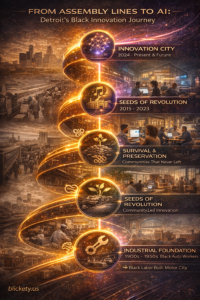
What To Pack:
- Business cards (seriously)
- Your pitch deck on your phone (you never know)
- Comfortable shoes (these factory buildings are massive)
- Open mind (required)
Events Calendar:
- Every Saturday: Black Tech Saturdays (blacktechsaturdays.com)
- September: Detroit Digital Empowerment Summit
- Year-round: Check Newlab Detroit’s event calendar
The Bigger Picture
Here’s what Detroit teaches us.
The future doesn’t belong to the cities with the most venture capital.
It belongs to the cities with the most community capital.
Detroit spent decades being written off. Mocked. Used as a cautionary tale about what happens to American cities when the factories close and white flight happens and disinvestment becomes policy.
But the people who stayed?
They didn’t just survive.
They built.
Black Tech Saturdays generated $30 million in economic impact in less than two years Blackpulsehq. That’s not foundation money. That’s not government grants. It’s wealth created by Black founders building real businesses solving real problems for real communities.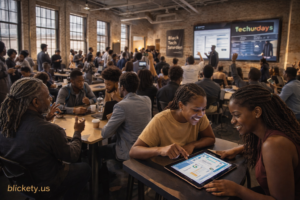
The Detroit Startup Fund awards grants ranging from $15,000 to $50,000 to Detroit-based startups focused on scalable, venture-backable companies that improve quality of life for Detroit residents City of Detroit. That’s public money going directly to local innovation.
The Michigan Economic Development Corporation supported 636 loans totaling $72 million, including over $18.1 million in new loans to Socially or Economically Disadvantaged Individuals Michigan Business. That’s systemic support.
This isn’t accidental.
This is intentional.
From Black Leaders Detroit’s 0% interest loans to businesses owned by people of African descent Blackleadersdetroit to the network effect of Black Tech Saturdays to the physical infrastructure of Newlab—Detroit is building an entire ecosystem designed to create Black wealth, Black ownership, Black futures.
And they’re doing it without asking Silicon Valley for permission.
Before You Go
One more thing.
When you visit Detroit, you’re going to see empty lots. Abandoned buildings. The physical scars of disinvestment and white flight and all the systematic dismantling of Black urban wealth that happened in the 20th century.
Don’t look away from that.
But also don’t only see that.
Because in between those scars, there are people building. There are startups in maker spaces that used to be empty factories. There are kids learning to code in community centers. There’s entrepreneurs who could have left but stayed, who could have taken their talents somewhere “easier” but chose the harder path of building where they’re from.
That’s not resilience.
That’s revolution.
Detroit is proof that you don’t rebuild a city from the top down.
You build it from the ground up.
From Black hands.
From people who never stopped believing that tomorrow belongs to whoever has the courage to build it today.
So yeah, come to Detroit.
Come for Black Tech Saturdays.
>Come for Newlab and Michigan Central.
>Come for the soul food and the energy and the architecture.
But come with your eyes open.
Because what’s happening in Detroit isn’t just about one city’s comeback.
It’s about what Black folks have always known: We don’t need saving. Whats needed are resources. We need ownership. We need the world to get out of our way and let us build.
And in Detroit?
They’re building.
Ready to experience Detroit’s Black tech revolution firsthand? Start planning your trip at blacktechsaturdays.com and michigancentral.com. Follow @theafrofuturist for more dispatches from cities where Black futures are being built right now.