The Gold Was Always Ours — The Question Is Whether We Can Hold It

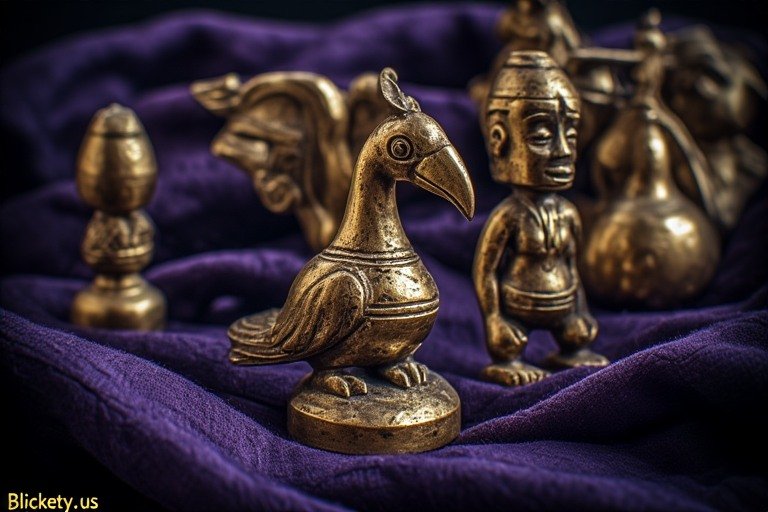
Long before the Europeans arrived on the Gulf of Guinea and renamed the land the Gold Coast, the Ashanti had already built a civilization on the back of gold. The weight of Ashanti gold — measured in brass takoes, worn by chiefs in regalia that connected earth to throne — was not just wealth. It was governance. Sovereignty expressed in metal. The Afro-Futurist line from those brass weights to today’s Minerals Commission licensing requirements is not metaphor. It is continuity. Ghana mining investment is the living inheritance of that sovereignty — and it is protected accordingly.
For centuries, Ghana was known as the Gold Coast, and gold has been a cornerstone of the country’s economy and history as far back as the 7th century, allowing ancient empires like the Ashanti to dominate regional trade and amass great wealth and power. Wilson Center That gold is still there. In 2023, gold accounted for nearly half of all Ghanaian exports. Wilson Center Ghana is Africa’s largest gold producer and among the top ten globally.
The diaspora knows this. What the diaspora keeps getting wrong is the assumption that knowing it — feeling the pull of it, believing in the ancestral claim — is the same as being legally positioned to act on it. It is not. Cultural belonging and legal standing are not the same thing. The gate to Ghana’s mineral wealth is not ancestral feeling. It is citizenship, compliance, and structure.
This piece names the five things ancestry cannot buy. Then it builds the machine that can.
Ghana Mining Investment: The Five Things Ancestry Cant Buy
Here is the scenario that plays out in diaspora investment circles with painful regularity. A group of high-net-worth individuals — doctors, tech founders, lawyers, real estate developers — pools capital, feels the pull of ancestral return, and attempts to enter one of the most legally complex, sovereignty-protected sectors in West Africa as if cultural identity were the same as legal standing.
The $200 million pooled in that group chat is not the problem. The thinking is.
On 14 April 2025, the Minerals Commission rejected Gold Fields Ghana’s application for an extension of the Damang main mining lease. The lease, initially granted in 1995, expired in April 2025. Despite subsequent engagements to demonstrate compliance, the application was denied. The Minister of Lands and Natural Resources stated that the decision aligned with the government’s policy shift away from automatic licence renewals, focusing on a comprehensive reassessment to maximise national benefit. Iclg

If a multinational with decades of operational history in Ghana cannot assume continuity, a diaspora consortium arriving with ancestral energy and a pooled fund has no chance without the right structure. The Damang decision is a sovereignty signal, not an aberration. Ghana mining investment is governed by a framework that protects Ghanaian mineral wealth for Ghanaian people — and the diaspora’s path into that framework runs through five things that no amount of ancestry can substitute for.
Thing 1 — Legal Standing
Ancestry cannot buy legal standing in Ghana’s mining sector.
Section 83 of the Minerals and Mining Act, 2006 permits small-scale mining only by Ghanaian citizens aged 18 or older who are registered with the Minerals Commission. Watson Farley & Williams No exception for diaspora status. No carve-out for cultural affinity or DNA ancestry results. Citizens. Full stop.
In December 2020, Ghana passed the Minerals and Mining (Local Content and Local Participation) Regulations. As of January 1, 2025, the Local Procurement List is in its sixth edition and includes 52 categories of goods and services with a range of requirements, including mandatory Ghanaian ownership of supplying companies in some cases. U.S. Department of State The supply chain around mining — equipment, logistics, processing, services — is increasingly reserved for Ghanaian-owned businesses.
Right of Abode is an indefinite residence permit for African diaspora members that allows permanent residence in Ghana but does not grant citizenship rights — no voting, land ownership restrictions apply. Certifiedafrica Right of Abode is a pathway toward citizenship, not the destination. An African American with Right of Abode status living in Accra is still a foreign national under Ghana’s mining law. Legal standing is granted by the state. It is not inherited through the bloodline.
The first thing ancestry cannot buy is the legal authority to hold the asset.
Thing 2 — The Correct Legal Category
Ghana’s diaspora is not one thing. It is at least six legally distinct categories, each with different rights, different access levels, and different pathways to full participation in Ghana mining investment. Most diaspora investors do not know which category they occupy. That ignorance is expensive.
Ghanaian Citizens Abroad — Full citizenship retained. Qualify for everything including citizen-only mining licenses. This is the gold standard.
Dual Citizens — Ghana permits dual citizenship, granting full membership including voting, unrestricted land ownership, a Ghanaian passport, and the ability to pass citizenship to children. Certifiedafrica Same rights as citizens abroad. Full access.
Naturalized Diaspora — Completed Ghana’s naturalization process, typically requiring five or more years of continuous legal residence. The standard citizenship by naturalization process takes 12–24 months, though Ghana launched an accelerated cohort process for historic diaspora applicants in 2026. Certifiedafrica Once naturalized — fully Ghanaian. Mining rights attach.
Right of Abode Holders — Permanent residence, not citizenship. No voting. Land ownership restrictions. For mining purposes: foreign nationals. Citizen-only provisions do not apply.
Historic Diaspora — African Americans, Afro-Caribbeans, Afro-Latinos. In January 2026, Ghana’s Ministry of the Interior announced a citizenship application process for historic diasporans requiring DNA proof of Ghanaian descent, a two-year residence permit, and application fees totaling approximately GH₵26,500. Citizenship Rights in Africa Initiative That drive was subsequently suspended pending revision. It will resume. But cultural lineage, DNA results, and emotional homecoming are not legal tender at the Minerals Commission until the citizenship is finalized.
Non-Citizen Diaspora Investors — Access to large-scale mining through the foreign investment framework with minimum capital requirements and full sovereign discretion — the same discretion that just ended Gold Fields’ decades-long presence at Damang.
Ghana’s mining law recognizes citizenship, not cultural lineage. Category determines access. Getting this wrong costs everything downstream.
Thing 3 — Information That Matters
The diaspora investor operating on 90 percent cultural narrative and 10 percent legal reality is entering a different country from the one they think they’re entering.
The Gold Board was established in February 2025 to replace the Precious Minerals Marketing Company, overseeing the purchase, trade, assay, refining, and exportation of gold. An allocation of USD 279 million was made as a revolving fund to the Gold Board in Ghana’s 2025 Budget Statement. The new gold trading licence regime began, and gold dealers had to obtain new licences by June 2025. Iclg
Ghana’s 2025 National Budget extended the Growth and Sustainability Levy for mining companies from 2025 to 2028, meaning companies will continue paying the levy for three additional years beyond the original expiration date. U.S. Department of State
None of this is in the diaspora investment brochures. The cousin in Accra who says he knows people at the Minerals Commission is not due diligence. The family friend who can sort the license is not legal counsel. What Ghana mining investment requires is a Ghanaian corporate attorney who specializes in mining law, a certified accountant who understands local content regulations, and a compliance officer who has actually read the Local Procurement List — all six editions of it.
Ancestry cannot buy the information that matters. That requires work.
Thing 4 — An Operational Presence
Mining is not managed from a diaspora group chat. This is the most consistently ignored truth in the conversation about Black investment in Africa.
In practice, many miners operate outside Ghana’s legal requirements. Galamsey operations, often conducted in gold-rich areas, have led to the contamination of major water bodies due to the excessive use of mercury and cyanide. Watson Farley & Williams The diaspora investor who cannot navigate the formal sector and finds a “small-scale opportunity” that is actually illegal artisanal mining enters the galamsey trap. Illegal small-scale mining in Ghana is estimated to cost the country more than $2.3 billion each year in lost revenue and illegal smuggling. Wilson Center When the crackdown comes — and it comes — the investor does not just lose capital. They carry potential criminal exposure and have funded the environmental destruction of water bodies that communities depend on.
In Ghana, approximately 80 percent of land is designated as customary land under traditional institutions, with respective traditional authorities holding allodial titles according to customary law. ScienceDirect A mining entity that does not have community liaison specialists who understand those relationships — who know which Stool authority controls which land, how to negotiate community development agreements, how to operate within the customary governance framework — is building on sand.
The operational layer requires geologists, licensed surveyors, mine engineers, EPA compliance officers, community liaisons, and financial controllers physically present in Ghana. Ghana’s anti-fronting regulations address entities whose actual decisions are made abroad by people whose names appear on an Accra registry — and the penalties are serious.
Ancestry cannot buy an operational presence. Only people on the ground can do that.
Thing 5 — Tender Readiness
The Damang decision is not just a cautionary tale for multinationals. It is an invitation — the clearest signal yet that strategically significant mineral assets in Ghana are being reassigned to Ghanaian-owned entities through restricted tenders. The diaspora consortium that is not ready when that window opens does not get a second chance.
Tender readiness is a specific, documentable state of organizational preparation. Audited financials prepared under Ghanaian accounting standards. Proof of citizenship for every principal. Technical capability documentation — geological surveys, mining plans, environmental management frameworks. Community development commitment satisfying the expectations of customary authorities in affected areas. Anti-fronting declaration demonstrating genuine Ghanaian ownership and operation. All of this assembled, current, and submittable on short notice.
Entities that begin assembling their dossier after the tender is announced miss the window. The window does not reopen.
Ancestry cannot buy tender readiness. Structure, time, and discipline build it.
The Machine — Seven Layers of a Compliant Entity
The five things ancestry cannot buy are not obstacles to Ghana mining investment. They are the five pillars of the machine that makes it possible. Here is the machine.
The correct structure is a Ghanaian citizen-owned Special Purpose Vehicle — registered under Ghanaian law, owned entirely by Ghanaian citizens, funded by diaspora capital through legal channels, operated by Ghanaian professionals, compliant with every layer of the Minerals Commission’s requirements. Not a foreign vehicle with a Ghanaian flag painted on it. A Ghanaian company.
Layer 1 — The Legal Layer: Citizenship Verification. Every person in the ownership structure must have Ghanaian citizenship legally verified before a dollar moves. Ghanaian birth certificate, valid passport, dual citizenship documentation, or naturalization certificate. The Minerals Commission does not accept honorary Ghanaianness.
Layer 2 — The Ownership Layer: 100% Ghanaian SPV. Ghanaian citizens hold 100 percent of the equity. Diaspora investors who are not yet citizens participate through loan structures or convertible notes — they cannot appear in the equity structure if the entity needs to qualify for restricted tenders.
Layer 3 — The Governance Layer: Ghanaian Directors and Management. The board is Ghanaian citizens. The chief executive is Ghanaian. Senior management is Ghanaian. Anything else is a fronting arrangement.
Layer 4 — The Capital Layer: Diaspora Capital Plus Ghanaian Financing. In May 2025, the Managing Director of the Ghana Stock Exchange noted that Ghana and Nigeria alone had pension funds amounting to almost $40 billion but that more than 90 percent was parked in government securities because there were no available investment opportunities. ISS African Futures The local capital exists. The diaspora capital exists. The SPV connects them.
Layer 5 — The Compliance Layer: Minerals Commission, EPA, Local Content. Three mandatory registrations. The Minerals Commission issues the mining license. The EPA approves the Environmental Impact Assessment. The Local Procurement List governs every supply chain decision. None of these are afterthoughts.
Layer 6 — The Operational Layer: On-Ground Technical Teams. Geologists, surveyors, engineers, EPA compliance officers, community liaisons, financial controllers — physically present, employed by the Ghanaian entity, reporting to Ghanaian management. Without this layer, every other layer is paper. 
Layer 7 — The Tender-Readiness Layer: Dossier, Certifications, Anti-Fronting. Complete tender dossier, continuously maintained. Audited financials. Citizenship proof for all principals. Technical documentation. Community development plan. Anti-fronting declaration. Always ready. The window does not reopen.
Seven layers. All of them. No shortcuts.
Ghana Mining Investment and the Afro-Futurist Interpretation
Mining is not just an industry in Ghana. It is a sovereignty marker. The state’s move on Damang — asserting operational control from a multinational to reassign to Ghanaian hands — is not economic policy in isolation. It is a declaration of who owns the future. Ghana mining investment, done correctly, is the most direct expression of the Afro-Futurist project available to the diaspora right now.
The Afro-Futurist project has always been about closing the gap between belonging and ownership. The ancestors who built the pyramids owned the civilization they constructed. The architects of Black Wall Street owned the banks and hospitals and newspapers they built. The tragedy of the diaspora’s relationship to Africa is not the distance. It is the persistent confusion between emotional homecoming and structural claim.
Ghana’s locality laws are not exclusion. They are what a nation looks like when it decides to protect its own. The diaspora should not fight that protection. It should qualify for it.
The African diaspora sends over $100 billion back to the continent annually. Structuring remittances into formal investment vehicles provides a substantial opportunity. Cornell SC Johnson But remittances are not ownership. They are consumption support sent through love. Ghana mining investment structured through a compliant citizen-owned SPV is something categorically different — it is the construction of a Ghanaian entity that holds mineral rights, employs Ghanaian professionals, pays Ghanaian taxes, builds Ghanaian infrastructure, and compounds Ghanaian wealth across generations.
That is sovereignty. Not sentiment. Sovereignty.
The New Diaspora Contract
The old contract between the diaspora and the continent was built on remittances, nostalgia, and occasional resort investment in a place the sender visited once a year. It was transactional. It was asymmetrical. It did not build power.
The new contract is built on legal citizenship, operational presence, structural compliance, and generational capital deployment. It treats Africa not as a heritage destination but as a legal jurisdiction in which the diaspora holds rights — earned through the work of becoming a legal actor, not assumed through the accident of ancestry. 
Five things ancestry cannot buy in Ghana mining investment: legal standing, the correct legal category, information that matters, an operational presence, and tender readiness. Five things the machine must be built to provide. When the machine runs — when a diaspora-funded, Ghanaian-citizen-owned, professionally managed, fully compliant SPV submits a tender dossier for a strategic Ghanaian mining asset — it proves something that matters far beyond gold. It proves that Black global capital can operate at the highest level of sovereignty-protected enterprise, that African legal frameworks are structures to be honored and operated within, and that the future of Black economic power runs through building institutions that the sovereign nation-state recognizes, respects, and rewards.
Diaspora capital plus Ghanaian citizenship plus operational discipline equals continental power. That equation is not a slogan. It is a business plan. How about going over to the fashion department and peep out what’s going on over there: London, Lagos, and Harlem.
The next piece in this series maps the same framework onto three other African resource sectors — lithium in Zimbabwe, cocoa processing in Côte d’Ivoire, and port logistics in Senegal — asking the same question in each: what does a diaspora-powered, sovereign-compliant, citizen-owned entity look like, and what does it need to qualify? The mining map is the first chapter. The continent is the book.