Lagos to London to Harlem: The Amazing Black Diaspora Fashion Ecosystem Running the World

There’s a thread running through it all. Literally. The Kente woven in Ghana centuries ago for royalty, carried across an ocean in fragments of memory, showing up in 2021 on the Louis Vuitton runway in Paris — put there by Virgil Abloh, a son of Ghanaian immigrants from Rockford, Illinois, who became the first Black artistic director at a major French fashion house. That’s not a story about one designer’s breakthrough. That’s a signal traveling through a network. The Black diaspora fashion ecosystem — Lagos to London to Harlem and every city in between — has been transmitting that signal for decades. The industry is just now learning to read it.
Lagos London To Harlem The Black Diaspora Fashion Ecosystem Has Always Been Global
Here’s what gets missed when people talk about “the rise of African fashion” like it’s a new thing: it was never local. The aesthetics, the textiles, the silhouettes, the symbolic languages of adornment — they traveled with Black people through the Middle Passage, through the Great Migration, through every diaspora wave and forced displacement. What’s different now is infrastructure. The network has nodes.
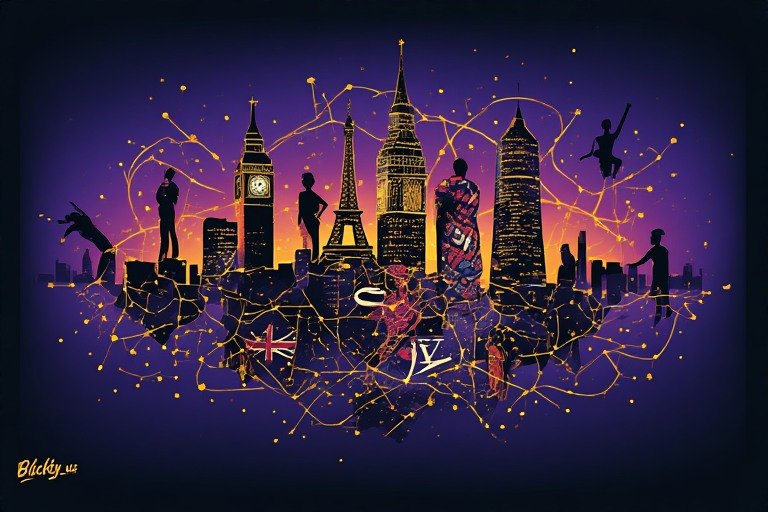
Lagos. London. Harlem. Accra. Johannesburg. Paris. Brooklyn. Each city is a transmission point in the Black diaspora fashion ecosystem, sending and receiving cultural data. A young designer in Lagos absorbs Afrobeats energy, traditional Yoruba textile craft, and Instagram aesthetics from New York simultaneously. A designer in South London draws on her Lagos grandmother’s tailoring legacy and her Brixton upbringing in the same collection. The signals don’t travel in one direction. They travel everywhere at once.
Designers like Virgil Abloh, Tremaine Emory, Oliver Rousteing, and figures from the 1970s and 1980s like Stephen Burrows and Patrick Kelly represent important yet long-unexamined fashion histories that form the current global fashion ecosystem. Yale Books One of the first exhibitions to formally document this — Africa’s Fashion Diaspora — ran at the Museum at FIT in New York through late 2024. The fact that it took this long to get a museum exhibition is telling. The work was always happening. The recognition just finally caught up.
Founded by mother-daughter duo Rebecca Henry and Akua Shabaka, House of Aama has emerged as a powerhouse in the luxury fashion industry, artfully weaving African-American folklore, history, and spirituality into contemporary design.
“They will have us thinking we’re about to die. But we really coming up like a motherfucker…” – 2Pac