The Smartwatch That Can’t See You
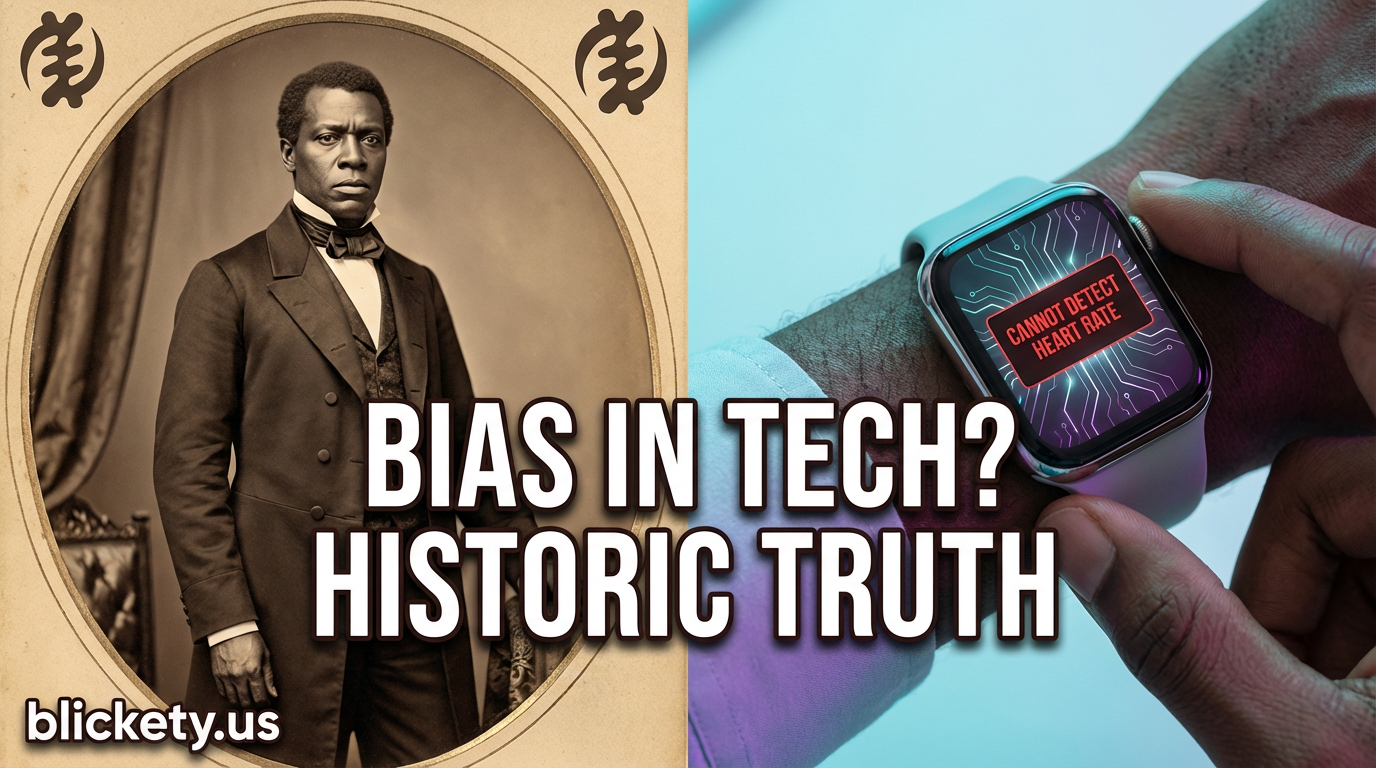
Three miles into your morning run. Heart hammering. Sweat rolling down your temples. Your $400 smartwatch buzzes, displaying 72 beats per minute—resting pulse. You know it’s lying.
This isn’t a glitch. Your wrist-worn machine simply cannot see you. Melanin absorbs the green LED light that photoplethysmography sensors use to detect blood volume changes. The more melanin in your skin, the weaker the signal. Consequently, the device trusts white skin by default and treats dark skin as error.
Recent studies confirm what Black users already knew: smartwatches provide significantly less accurate heart rate data for people with darker skin tones, particularly during exercise. One 2024 systematic review analyzing data from 469 participants found that four of ten studies reported “significant reduction in accuracy” for darker-skinned individuals. Meanwhile, another 2025 narrative review examining research through May 2025 documented “systematic inaccuracies in smartwatch PPG, disproportionately affecting individuals with darker skin tones.”
Wait—haven’t we been here before?
Perception as Infrastructure
Frederick Douglass understood something in 1841 that Silicon Valley still refuses to learn in 2026: how you are perceived determines your future.
Perception isn’t cosmetic. It’s structural, shaping policy, policing, medicine, economics, technology, and identity itself. When machines cannot see you accurately, you don’t just get bad data—you get locked out of the futures those machines are building.
This is why Douglass is the first Afrofuturist.
Not because he wrote science fiction. Not because he speculated about spaceships or cybernetics. Rather, he recognized that the future is a time, not a place—and he fought a perception war to ensure Black people could exist in America’s tomorrow.
Douglass: Temporal Futurism 
The Camera as Time Machine
Photography was invented the same year Douglass escaped slavery. Both emerged in 1838, representing radical new technologies of seeing and being seen.
Douglass immediately grasped photography’s revolutionary potential. Between 1841 and his death in 1895, he sat for over 160 photographs—more than Abraham Lincoln (126), George Custer (155), or any other 19th-century American. Research compiled in Picturing Frederick Douglass reveals he was not only the most photographed American of his era but also the most sophisticated theorist of photography’s social power.
Photography as Democratic Revolution
He wrote four major speeches about photography—one more than the Civil War era’s most prominent photo critic. Furthermore, he believed passionately in the medium’s democratic potential and its capacity to disrupt racial hierarchies.
“The humblest servant girl may now possess a picture of herself such as the wealth of kings could not purchase fifty years ago,” Douglass declared. To him, photography was the great equalizer—a technology that could assert Black humanity against the dehumanizing caricatures of minstrelsy and racist propaganda.
Self-Authorship as Survival Technology
Douglass controlled every element of his photographic presentation. He never smiled (seeing smiles as too friendly, too accommodating). Instead, he wore dignified clothing and posed against dark, simple backgrounds that emphasized his features rather than ornate props. Additionally, he objected vehemently when engravers or illustrators altered his image, once protesting the misrepresentation of “the face of a fugitive slave” when someone dared add a smile.
This was perception hacking at its finest—using emerging technology to project a future Black self into a hostile present.
Literacy had been forbidden tech for the enslaved. Photography became democratic tech for the freed. Narrative became firmware updates—each autobiography rewriting the code of how America understood Blackness. Media became time travel, allowing Douglass to speak to generations yet unborn.
His strategy was simple but revolutionary: If I control how you see me, I control what futures you can imagine for me.
Delany: Spatial Futurism
When America Itself Is the Problem
Martin Robison Delany, Douglass’s contemporary and colleague at The North Star, saw the same perception problem but reached a different conclusion. 
America, Delany believed, was irredeemable.
After Harvard Medical School admitted him in 1850—one of the first three Black students—white students petitioned for his removal. Within three weeks, administrators dismissed him despite faculty support. Furious, Delany returned to Pittsburgh convinced that the white ruling class would never allow Black people to lead.
The Case for Sovereignty
In 1852, he published The Condition, Elevation, Emigration, and Destiny of the Colored People of the United States, Politically Considered. The message was stark: Black people had no future in America. Accordingly, they should leave and found a new nation elsewhere—perhaps the West Indies, Central America, or Africa itself.
Delany’s philosophy rested on three principles. Nations must control geographical territory, possess sufficient population, and maintain immense staple production as wealth. Africa, with its vast indigenous population and agricultural potential, seemed the natural site for a free, self-governing, economically self-reliant Pan-African nation.
The Niger Valley Expedition
In 1859, he led an exploration party to the Niger Valley, negotiating a treaty with eight chiefs in Abeokuta (modern-day Nigeria) that would permit Black American settlers on “unused land” in exchange for applying their skills for community good.
Here’s the problem Delany couldn’t solve: anti-Black perception is portable.
It follows across borders. Misrecognition reassembles globally. The gaze that misreads Black bodies in Chicago will misread them in Lagos. Colonialism had already exported white supremacist optics worldwide.
Still, Delany’s spatial futurism established a crucial intellectual genealogy. He became the father of Black nationalism—the architect of sovereignty thinking. His descendant Kenneth B. Morris Jr. (who is also Booker T. Washington’s great-great grandson) writes that Delany “had the foresight to skillfully use emerging medium” to “define himself as a free man and citizen in the public consciousness.”
Frederick Douglass himself said of Delany: “I thank God for making me a man, but Delany thanks Him for making him a Black man.”
Machine Vision: The New Gaze
When Algorithms Inherit Bias
Fast forward 185 years.
The perception war hasn’t ended—it’s accelerated and automated.
Smartwatches using photoplethysmography (PPG) struggle with melanin. Facial recognition systems misidentify Black faces at rates up to 100 times higher than white faces. Predictive policing algorithms concentrate enforcement in Black neighborhoods. Medical AI trained predominantly on light skin fails to detect conditions in darker patients. Hiring algorithms filter out résumés with “ethnic-sounding” names.
Algorithmic Speed, Amplified Harm
The shift from human perception to algorithmic perception makes bias faster, colder, more confident, and less accountable.
Research published in October 2025 analyzing smartwatch accuracy across diverse skin tones found that “melanin’s absorption of green light raises concerns about measurement accuracy in individuals with darker skin tones.” Multiple validation studies demonstrated devices showed “mean heart rate error” significantly higher for Fitzpatrick scale types 4-6 (medium to dark skin) compared to types 1-3 (light skin), particularly during exercise when heart rates exceeded 40% of maximum reserve.
Beyond Fitness: Life-and-Death Stakes
This matters beyond fitness tracking. Smartwatches increasingly market themselves for arrhythmia detection, hypertension monitoring, and early warning systems for cardiac events. When these devices systematically fail for dark-skinned users, the health consequences compound existing medical disparities.
Douglass saw the beginning of this war.
Richard Wright mapped its psychological damage.
We live in the acceleration.
Wright: Psychological Futurism
Fear as Firmware 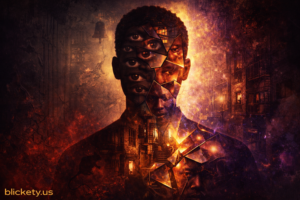
Richard Wright’s 1940 masterpiece Native Son operates as the missing link between Douglass’s photography and contemporary machine vision.
Wright understood something crucial: the gaze shapes the self from the inside out.
Bigger Thomas, his protagonist, lives under constant surveillance—not by cameras but by the omnipresent white gaze that monitors, judges, and punishes Black movement through space. Every action gets filtered through the question: How will this look to white people? What will they think I’m doing?
The Pavlovian Trap
The novel opens with a Pavlovian shock—an alarm bell that startles Bigger awake in a cramped apartment he shares with his mother, brother, and sister. A rat appears. Bigger kills it. This scene establishes the pattern: Bigger trapped in a behavioral loop of stimulus and response, fear and violence, misperception and punishment.
Wright wrote during the peak of American behaviorism, when psychologists believed human behavior could be conditioned like Pavlov’s dogs. Native Son demonstrates how racism operates as systematic conditioning—creating feedback loops where fear generates behavior that confirms stereotypes that justify further oppression.
When Misperception Becomes Self-Fulfilling Prophecy
Bigger accidentally kills Mary Dalton not from malice but from terror of being caught in her bedroom. His fear of how the scene will be misperceived (Black man with unconscious white woman) drives him to smother her to prevent her from making noise when her blind mother enters the room. Then, having killed once, he becomes the monster he was already perceived to be.
This is psychological futurism—mapping how external surveillance creates internal fragmentation.
Du Bois called it double consciousness: “this sense of always looking at one’s self through the eyes of others, of measuring one’s soul by the tape of a world that looks on in amused contempt and pity.”
From Psychology to Code
Wright showed how that split self becomes a self-fulfilling prophecy. Misperception creates fear. Fear generates reactive behavior. Behavior confirms stereotype. Stereotype justifies punishment. Punishment becomes destiny.
Contemporary research on algorithmic bias in criminal justice systems reveals the same dynamic playing out through code. Predictive policing tools trained on historical arrest data concentrate surveillance in Black neighborhoods. Increased surveillance produces more arrests. More arrests confirm the algorithm’s prediction that these areas are “high crime.” The loop closes.
Wright gave us the psychological architecture. Machine learning automated it.
The Genealogy Completed
Five Futurisms, One War
Here’s how perception warfare evolved across 185 years:
Douglass → Temporal Futurism: Fight to exist in America’s future by controlling present perception through media technology.
Delany → Spatial Futurism: Seek sovereignty through geographical separation when perception cannot be hacked from within.
Washington → Institutional Futurism: Build institutions (Tuskegee) that force recognition through demonstrated competence and economic power.
Du Bois → Transnational Futurism: Expand the frame globally through Pan-Africanism when American borders constrain possibility.
Wright → Psychological Futurism: Map the interior battlefield where misperception becomes self-conception.
Machine Vision → The New Frontier: Automate perception through algorithms that inherit historical bias and execute it at computational speed.
Afrofuturism Reframed 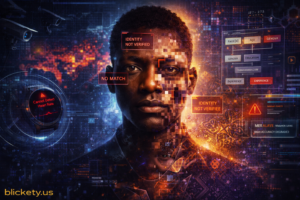
Not Aesthetics—Survival Imagination
This is what Afrofuturism actually is—not aesthetics, but survival imagination.
It’s the practice of imagining Black futures when the present actively denies them. Technology as liberation. Narrative as weapon. Perception as infrastructure.
When your smartwatch cannot see your heartbeat, when facial recognition mistakes you for a criminal, when hiring algorithms filter you out before human eyes see your application—you’re living in the future Douglass fought against in 1841.
He understood that the battle isn’t just about rights or representation. It’s about who gets to exist in tomorrow.
We Must Fight to Be Seen
The War Continues
The smartwatch moment returns.
Your device still displays 72 bpm while your chest pounds at 165. Melanin still absorbs green light. Algorithms still misread Black faces. Predictive models still concentrate surveillance in Black neighborhoods. Medical AI still fails on dark skin.
Douglass’s prophecy stands fulfilled: perception determines destiny.
Perception Can Be Hacked
But here’s what he also understood—perception can be hacked.
Photography disrupted painted portraits. Frederick Douglass disrupted photography. Social media disrupted traditional gatekeepers. Now we disrupt the algorithms.
Build the Future We Deserve
The tools are different. The mission remains: build systems that outlast you, create content that multiplies throughout your community, architect a future where Black excellence isn’t just celebrated—it’s systematically supported by structures we own and control.
From Douglass’s daguerreotypes to machine learning models, the war continues.
This time, we’re writing the code.