Table of Contents
https://the-afrofuturist.com/wp-content/uploads/2026/04/ultimate-black-album-scholar-edition.pdf
- How the Question Started
- The Difference Between Greatest and Ultimate
- The 7-Point Ultimate Black Album Framework
- Why the Critical Favorites Fall Short
- The Disqualified: Albums That Almost Made the Conversation
- Ultimate Black Album: Why Make It Last Forever Wins
- The Provokes and Soothes Doctrine
- What Organic Governance Actually Means
- The Verdict
How the Question Started

It started the way the best arguments start — not with a thesis, but with a genuine question. What is the greatest Black album of all time? And is greatest even the right word — or is ultimate Black album the question nobody has asked correctly? Like most genuine questions, it led somewhere I didn’t expect. Because somewhere between Marvin Gaye and Stevie Wonder and Lauryn Hill and the checklist I built to answer it, I stopped asking about the greatest Black album and started asking about something different. Something more specific. More personal. More real.
I started asking about the ultimate Black album. And those are not the same question.
The Afro-Futurist framework I carry into every conversation about Black culture begins with a single operating principle: lived experience is authority. Not consensus. Not critical metrics. Not Rolling Stone lists. The people who built Black culture — who danced to it, loved to it, mourned to it, celebrated to it in parks and cars and kitchens and bedrooms — those people hold the final judgment. Their governance is organic. That is what led me, after working through every contender the critics have given us, to a single answer that none of those critics would put at the top of their list.
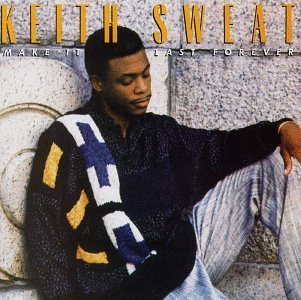
Keith Sweat. Make It Last Forever. 1987.
The Difference Between Greatest and Ultimate
Let’s be precise about this, because the distinction is everything.
The greatest Black album is a critical designation. It is awarded based on artistic achievement, cultural influence, technical innovation, and historical significance. By those metrics, the answer is fairly settled: Rolling Stone listed What’s Going On as the greatest album of all time in both its 2020 and 2023 revisions. Wikipedia Marvin Gaye’s nine-song, 35-minute masterpiece is the critical consensus champion, and the case for it is real — it was a concept album intended to be listened to and processed as a single work of art, a pivotal precursor to R&B albums as complete, ambitiously conceived musical statements, from Stevie Wonder’s Songs in the Key of Life to Beyoncé’s Lemonade. Variety
The ultimate Black album is something different entirely. It is emotional, cultural, and personal. It is the album that feels like “this is us” — the one that hits the deepest, represents the most, and functions in the full range of Black life: the park, the cookout, the family reunion, the car, the bedroom, the block. It doesn’t just reward careful listening. It lives in the body. It moves people. It has that two-fold quality — it provokes and soothes — in a way that no other album matches.
The ultimate Black album is the one Black people actually claim as theirs. Not because critics told them to. Because the music earned it in their real lives.
That’s the framework. Now let’s apply it.
The 7-Point Ultimate Black Album Framework
These are the seven criteria — not for the greatest, but the ultimate. They came out of a real conversation about real Black life. Every criterion must be met.
1. It feels like “this is us.” Not in a political or artistic sense but in the immediate, bodily sense. When this album plays, people recognize themselves.
2. Deep emotional resonance. It doesn’t sit in the background. It makes you feel something — nostalgia, longing, joy, desire, warmth. It demands your attention and rewards it.
3. Versatility across Black life. It works at the park. It works in the car. It works at the family reunion. It works in the bedroom. It doesn’t require a specific mood or occasion. It transcends settings.
4. Timelessness and generational transfer. It gets passed down. Younger generations still play it. Thirty years later it sounds just as alive as it did the day it dropped.
5. Sonic identity. You know it in five seconds. The production, the bass, the drums — it has a fingerprint that is immediately recognizable and permanently associated with Black life of its era.
6. Emotional and physical duality. The same album that makes you feel something deep makes your body move. It works in the mind, the heart, and the hips simultaneously. This is the rarest quality.
7. Cultural ownership and legacy. Black people claim it as theirs. Not as a museum piece. As living property — something they play, quote, reference, and pass down because it belongs to them.
This is the framework. Now let’s see which albums survive it.
Why the Critical Favorites Fall Short
This is not a dismissal of these albums. It is an honest accounting of where they fall short by the organic criteria.
What’s Going On — Marvin Gaye (1971)
What’s Going On is a concept album with most of its songs segueing into the next, told from the point of view of a Vietnam veteran returning home to witness hatred, suffering, and injustice. Wikipedia It is brilliant. It is historically essential. Nelson Mandela, soon after his release from 28 years in prison in 1990, quoted lyrics from the album at Tiger Stadium in Detroit. Byline Times When your album reaches that altitude, you have done something permanent.
But the organic framework reveals its limitation: when do you actually play it? Not put it on respectfully. When do you just throw it on? One reviewer noted he doesn’t listen to it very often. Another gave it a 3/5 for listening pleasure despite a 4.5/5 for lyrical material. Classic Rock Forum That gap between reverence and use is the problem.
What’s Going On scores a 10 on greatness and a 6 on the ultimate scale. It is a masterpiece that most people treat like a museum piece — something to appreciate, not something to live inside. It doesn’t rattle the trunk. It doesn’t start the slow drag. It doesn’t make the park say “heeeeeey” when it comes on. It asks you to sit with your pain. That is different from what the ultimate requires.
What’s Going On is one of my favorite concept albums. And thinking about it took me somewhere unexpected — back to a cold rainy night in Richmond, Texas, 1983. Me and a few friends needed somewhere out of the weather to get high comfortably. We were teenagers. We broke into an apartment.
Somebody put on Dark Side of the Moon, another one of my favorites, another great concept album I already knew well at that point. We were deep into it when “On the Run” came on — and that helicopter sound effect hit different that night. My brain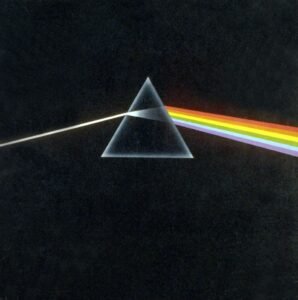 made one decision without consulting me: police. I was out the door and fifty yards down the street before a single clear thought stopped me cold. Richmond, Texas. Population five thousand. There were no police helicopters in that town. I went back inside and told them what happened. They clowned me for weeks.
I carry no embarrassment from that night. It is one of my favorite memories. But what it gave me — beyond the story — was a permanent relationship with Dark Side of the Moon. Not as the greatest concept album. As one that belongs to a specific cold rainy night in a broken-into apartment in Richmond that I will never get back. That is personal. That is mine.
Make It Last Forever works differently. What it holds is not one person’s memory. It is everybody’s.
Songs in the Key of Life — Stevie Wonder (1976)
A double album plus bonus EP, nearly ninety minutes long, spanning funk, soul, jazz, gospel, reggae, and classical. Stevie wrote it, produced it, and played most of the instruments himself. It is the most ambitious album in Black music history, and the ambition is audible in every track. But that ambition is also its limitation under the organic criteria. Unless you are a Stevie devotee, this album requires focus and patience to survive the tracks you don’t love on the way to the ones you do. It is a patchwork. Beautiful patchwork, but patchwork. You don’t just throw it on. The ultimate never asks that of you.
The Miseducation of Lauryn Hill — Lauryn Hill (1998)
The Miseducation is a genuine cultural landmark. But be honest: how many of the album tracks do you hear outside of its singles? The hit singles from this album are legendary. The album cuts are almost entirely invisible in the culture. Nobody is playing “Forgive Them Father” at the cookout. Nobody’s deep cut from this record is rattling anybody’s trunk. It lives almost entirely as a singles album in the culture, which means it fails the versatility criterion. The ultimate Black album has no weak link in its application to Black life. Every track carries weight in the real world.
The Disqualified: Albums That Almost Made the Conversation
Some albums deserve to be named before they are eliminated. Dismissing them without acknowledgment would be intellectually dishonest. So here is the honest accounting.
Illmatic — Nas (1994) and To Pimp a Butterfly — Kendrick Lamar (2015)
Both are masterworks. Both belong in any serious conversation about Black artistic achievement. But neither can be the ultimate Black album for the same structural reason: hip hop albums are built around the MC. The album exists to serve the artist’s perspective — Nas’s Queensbridge, Kendrick’s consciousness, their specific mind in a specific moment. Make It Last Forever exists to serve the listener’s life. That is the difference between a great album and the ultimate one. Illmatic is Nas’s story. To Pimp a Butterfly is Kendrick’s reckoning. Make It Last Forever is everybody’s Saturday night. The ultimate Black album cannot belong to one person’s world. It has to belong to the whole room.
Thriller — Michael Jackson (1982) and Purple Rain — Prince (1984)
Both are pop crossover phenomena engineered specifically to breach mainstream America. That ambition disqualifies them. It did not need to cross over anywhere. It was already home before the mainstream arrived. Thriller and Purple Rain are monuments. They are not ours in the way the ultimate requires.
12 Play — R. Kelly (1993)
This one requires more than a dismissal. 12 Play absolutely influenced Black culture — its sonic fingerprint is undeniable and its commercial impact was real. But there is a causality argument that cannot be ignored: the album normalized a specific predatory framing of Black sexuality and compounded it forward through the culture across decades.
When a song like Sexyy Red’s “Pound Town” functions not as a novelty but as a logical cultural endpoint, the line back to 12 Play is not a coincidence. It is a progression. An album that leaves that kind of debt in the culture cannot be the ultimate. Make It Last Forever is sensual without being predatory. It wants you. 12 Play consumes you. That distinction matters when you are talking about what an album leaves behind.
Don’t Be Cruel — Bobby Brown (1988)
Strong. Genuinely strong. The bravado, the swagger, the hits — Don’t Be Cruel plays the park without question. But it doesn’t close the night. It doesn’t have the ballad depth that makes Make It Last Forever work across every setting and every hour. Bobby Brown’s album can start the party. It cannot end it. The ultimate goes the full distance. Don’t Be Cruel doesn’t.
Ultimate Black Album: Why Make It Last Forever Wins
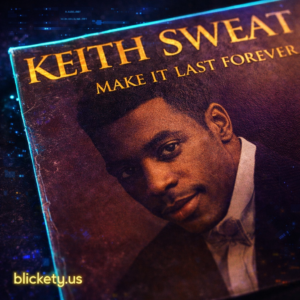
On November 24, 1987, Keith Sweat dropped Make It Last Forever, a debut album that would shape the R&B world forever. With Teddy Riley producing, the LP was packed with chart-toppers that made New Jack Swing the sound of young America in the late ’80s. Selling over three million copies, it helped launch the New Jack Swing genre into the mainstream. Grander Media
That’s the historical record. Here’s the organic truth.
Make It Last Forever became a blueprint. It fused hip-hop rhythm with classic R&B longing. It made vulnerability groove. SOUNDBITE BIO And the production — that bass, those drum machines, that lean, muscular sonic architecture — created something that has never stopped working in Black social settings because it was built from the beginning for exactly those settings.
Make It Last Forever was one of the earliest R&B albums to showcase the up-and-coming New Jack Swing sound, produced by Sweat himself and Teddy Riley. Wikipedia And just this year, the album’s legacy proved it is still very much alive: nearly four decades after their landmark album changed R&B, a disagreement between Teddy Riley and Keith Sweat bubbled into public view, with Riley claiming he was only paid $1,500 and didn’t receive royalties. Sweat pushed back, leading Riley to apologize and emphasize the cultural impact they achieved together as pioneers of the New Jack Swing sound. National Today When a 1987 album is still generating enough heat to cause a 2026 public dispute between its creators, that album has not become a museum piece. It is still living.
Now run Make It Last Forever through the 7-point framework:
“This is us?” Yes — it is the soundtrack to Black romance, Black social life, Black intimacy across nearly four decades. Emotional resonance? Every ballad on this album hits — “How Deep Is Your Love,” “Right and a Wrong Way,” “In the Rain” — songs that carry genuine emotional weight without requiring you to sit in silence and process them. Versatility? It plays at the park. It plays on the slab. It plays at the family reunion. It plays in the bedroom. It plays in the car with the windows down. Timelessness? Still getting played, still causing industry disputes, still on every old-school R&B playlist. Sonic identity? You know it in the first four bars. Always. Cultural ownership? Black people don’t need to be told this album is theirs. They know it.
And then there is the seventh criterion — the one that actually separates the ultimate from everything else.
The Provokes and Soothes Doctrine
This is where it gets the blackest. 
Here is the thing that no critic’s framework captures and no list can quantify: Make It Last Forever does something no other album on the contenders list can do. It provokes and soothes simultaneously. And it does this across every setting Black people occupy.
The bass on a ballad like “There’s a Right and a Wrong Way to Love Somebody” can cause chills in a quiet room. That same bass, in the right car with the right system, rattles the silver belt buckles on the coldest slabs any hood can offer. These are not two different songs. This is the same song, expressing two different sides of the same human experience, at the same volume, in the same key.
When “I Want Her” comes on at the park, the brothers and sisters start moving. Not because they consciously decided to dance — because their bodies responded before their minds caught up. When “Make It Last Forever” comes on later that same night, the setting has changed but the album hasn’t. The same songs that had people crunk at the car wash become the background to something more private. That transition — from MLK Boulevard to the bedroom, from the public to the intimate, from the communal to the personal — is what the ultimate Black album must be capable of. Make It Last Forever is the only album that makes that transition without losing a single step.
Make It Last Forever marks an early high point in a fleeting golden age in R&B where singing ability became important again. The slow quiet storm ballads like the title song took production tricks to new heights. The strongest songs were the uptempo ones — “I Want Her” and “Something Just Ain’t Right” proved it was still possible to look cool despite being sweaty from hard dancing. Beatopolis
Cool despite being sweaty from hard dancing. That sentence captures the duality perfectly. Make It Last Forever is the ultimate Black album because it holds that duality — the dance and the slow drag, the block and the bedroom, the crunk and the tender — in a single eight-song collection with no filler and no exceptions.
What Organic Governance Actually Means
My governance is organic. That sentence deserves to be understood before this article closes.
It doesn’t mean informal. It doesn’t mean anti-intellectual. It means that the authority to determine what is ultimate in Black culture is held by the people who have lived that culture — in their bodies, in their communities, in their social rituals, in their most private moments. Organic governance cannot be outsourced to Rolling Stone or Pitchfork or any publication whose writers were not at the park, not in the car, not at the family reunion when these songs changed the temperature of a room.
The Afro-Futurist tradition has always understood that Black excellence is not validated by external institutions. It is validated by the community it serves. The pyramid builders didn’t build for the approval of people who came after them. They built for the people who needed those structures, who would live and work and worship in the shadow of what they made. Black music works the same way. The ultimate Black album is not the one that earns a perfect score from a critic who listened to it once in a quiet room. It is the one that has proven, decade after decade, setting after setting, moment after moment, that it belongs to the people who need it.
Make It Last Forever belongs to Black people. Not as a critical designation. As a lived reality.
And that is why it is the ultimate Black album.
The Verdict
The greatest Black album of all time? Marvin Gaye’s What’s Going On. The critics are right. The history is undeniable. The achievement is real.
But the ultimate Black album — the one that feels like “this is us,” that works in every setting, that provokes and soothes, that passes the park test and the bedroom test and the trunk test and the reunion test without breaking stride — is Make It Last Forever by Keith Sweat.
I did not arrive at this conclusion easily. I went through the 7-point framework honestly, applied it to the best contenders in Black music history, and let the organic evidence lead me where it led. The ultimate Black album is not the one critics crown. It is the one Black people actually claim. And for nearly four decades, in parks and cars and bedrooms and family reunions across Black America, the answer has been the same.
Eight songs. No filler. Provokes and soothes. Bass that rattles the slabs and the soul simultaneously.
Keith Sweat didn’t know what he was building. The question is whether the rest of the conversation about Black music is ready to acknowledge what he built.
Did you know that one year in the 80’s only one Black band went platinum. Hard to believe? You can read about it here!!!
The next article in this series asks the question that flows naturally from this one: if organic governance is the standard, what other Black albums have been systematically underranked by critical consensus while overplaying in actual Black life? The quiet storm era alone has at least three more albums that deserve this conversation. We are not done.