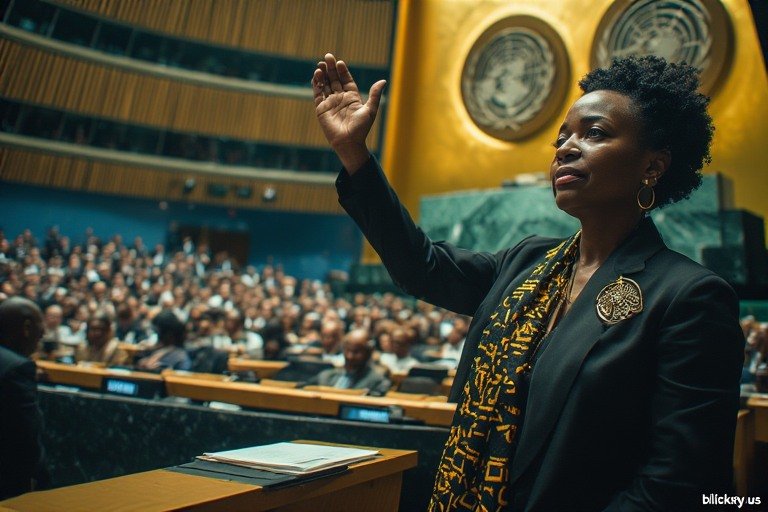
UN Slavery Resolution 2026 — The Gravest Crime Against Humanity Finally Named
Applause erupted in the United Nations General Assembly Hall on Wednesday as member states adopted a resolution declaring the transatlantic slave trade the gravest crime against humanity. UN News The sound of that applause carried something the vote count alone cannot measure — four hundred years of waiting for the world to say what the people who survived it always knew.
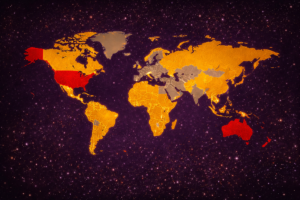
The UN slavery resolution declaring the gravest crime against humanity passed 123 to 3. Three countries opposed it — the United States, Israel, and Argentina. Fifty-two abstained, including the United Kingdom and every member of the European Union. Al Jazeera
Read that again slowly. One hundred and twenty-three nations said yes. The country built on the labor of enslaved Africans said no.
This is not a coincidence. This is a position. And understanding what it means — what the resolution actually does, what it doesn’t do, and what Black communities cannot afford to wait for governments to do — is the work of this moment.
What the Resolution Actually Says
The language of the resolution is worth sitting with before the political analysis begins. Because the words themselves are a form of reckoning.
The resolution emphasized the trafficking of enslaved Africans and racialized chattel enslavement of Africans as the gravest crime against humanity “by reason of the definitive break in world history, scale, duration, systemic nature, brutality and enduring consequences that continue to structure the lives of all people through racialized regimes of labour, property and capital.” UN News
That last phrase is the one that matters most. Not just the historical crime. The enduring consequences. The racialized regimes of labor, property, and capital that still structure the economic architecture of the modern world. The resolution isn’t just naming what happened. It’s naming what’s still happening — in the racial wealth gap, in the housing market, in the labor market, in the prison system, in the zip codes where the descendants of enslaved people are still concentrated in poverty while the wealth extracted from their ancestors’ labor compounded for centuries in other hands.
The resolution unequivocally condemns the trafficking of enslaved Africans and racialized chattel enslavement of Africans, slavery and the transatlantic slave trade as the most inhumane and enduring injustice against humanity. Fortune It affirms the importance of addressing historical wrongs in a manner that promotes justice, human rights, dignity, and healing.
It also goes beyond acknowledgment. The resolution urges member states to engage in dialogue on reparations, including issuing formal apologies, returning stolen artifacts, providing financial compensation, and ensuring guarantees of non-repetition. Al Jazeera
And it demands the return of what was taken beyond people. The resolution urges the prompt and unhindered restitution of cultural items — including artworks, monuments, museum pieces, documents and national archives — to their countries of origin without charge. PBS
That’s not a symbolic gesture. That’s a demand for the physical return of African civilization’s material record — the masks in European museums, the artifacts in British collections, the documents in colonial archives. The bones of the culture, taken along with the bodies of the people.
The Vote Map: Who Said Yes, Who Said No, and Why It Matters
Ghana’s President John Mahama, one of the African Union’s most vocal supporters of slavery reparations, was at the United Nations headquarters to champion the resolution. Channels Television He framed the vote not as a ranking of suffering but as a recognition of specificity — the particular scale, duration, and ongoing consequences of what was done to African people.
Ghana itself carries a complex weight in this moment. Ghana, which had a central role in the slave trade, has sought justice for descendants and called for reparations for decades. Business Day The country that was the departure point for millions of enslaved Africans — through Elmina Castle, through Cape Coast — is now the country leading the world toward acknowledgment. That is its own form of reckoning. Ancestral responsibility turned into ancestral advocacy.
Justin Hansford, a law professor at Howard University, said the resolution was significant as it represented the furthest the UN has gone in recognizing transatlantic slavery as a crime against humanity and in calling for reparations. “This marks the first vote on the floor of the UN,” Hansford said. “I cannot overemphasise how large of a step that is.” Business Day
The 52 abstentions from the EU and UK are their own statement. They are not “no” — but they are not “yes” either. The EU representative raised concerns about the resolution’s unbalanced interpretation of historical events and legal references that are inaccurate or inconsistent with international law, including suggestions of a retroactive application of international rules which was non-existent at the time. Fortune
Translation: we acknowledge it was terrible, but we don’t accept legal responsibility for it. We’ll stand in the hallway but we won’t walk through the door.
The Netherlands remains the only European country to have issued a formal apology for its role in slavery. Business Day One country. Out of the dozens that built their modern economies on the transatlantic trade. One.
UN Slavery Resolution and the Gravest Crime Against Humanity: What “Not Legally Binding” Actually Means
Here is where honest analysis matters more than celebration.
Unlike UN Security Council resolutions, General Assembly resolutions are not legally binding but are an important reflection of world opinion. PBS
That distinction is real and it has teeth. No country can be hauled before an international court solely on the basis of this resolution. No reparations payment is automatically triggered. No legal mechanism springs to life from this vote alone.
What the resolution does is political and moral. It shifts the terrain of the argument. It establishes that the international community — 123 nations worth of it — has formally recognized not just the historical crime but the ongoing consequences of it. That recognition becomes the foundation for the next argument. The reparative framework that African and Caribbean nations have been working toward now has a floor to stand on.
Ghana’s foreign minister Samuel Ablakwa said the resolution could pave the way for a reparative framework. “History does not disappear when ignored, truth does not weaken when delayed, crime does not rot … and justice does not expire with time,” Ablakwa said. The Irish Times
Think of it this way. Before today, the argument for reparations had to begin with the basic premise — was this a crime? Now that question has been answered by 123 nations. The argument moves forward. What are the remedies? What does accountability look like? Who pays? How much? By what mechanism?
Those are harder questions. But they’re better questions. And you can only ask them once you’ve established the foundation.
The US “No” Vote — A Position, Not an Oversight
This needs to be said plainly because the diplomatic language around it will soften what is actually a hard statement of values.
The United States of America — whose entire economic foundation was built on the forced, unpaid labor of enslaved African people for over two hundred years — voted against a resolution declaring that labor’s extraction a crime against humanity.
The US said it does not recognize a legal right to reparations for historical wrongs that were not illegal under international law at the time they occurred. Fortune
The US representative Dan Negrea said his country objected to the cynical usage of historical wrongs as a leverage point to reallocate modern resources to people and nations who are distantly related to the historical victims. Business Day
“Distantly related.” The grandchildren of enslaved people are “distantly related” to the historical victims. The people living in the communities hollowed out by the 2008 foreclosure crisis — the same communities targeted by predatory lending because their grandparents had been redlined out of wealth-building for generations — are “distantly related” to the crime that started the chain.
That argument is not a legal technicality. It is a position about who matters and whose history counts. And it was delivered today, in 2026, by the government currently dismantling the DEI programs, cutting the federal workforce that employs Black women at disproportionate rates, and rolling back the voting rights protections that were won through the blood of the civil rights movement.
The US “no” vote is the Poverty Industrial Complex operating at the highest level. The acknowledgment of the crime would require the acknowledgment of the remedy. The acknowledgment of the remedy would require the reallocation of resources. The reallocation of resources would disrupt the architecture of wealth that was built on the crime in the first place. So the answer is no. And the justification is legal language.
Ghana and the African Union: The Architecture Behind the Resolution
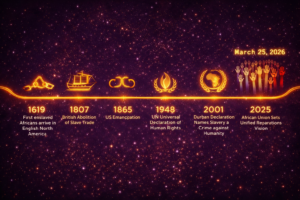
The resolution didn’t appear from nowhere. It was built. Deliberately. Over years.
The African Union last year set out to create a unified vision among its 55 member states about what reparations for slavery may look like. Al Jazeera That work created the political architecture that made Wednesday’s vote possible. Fifty-five African nations aligned on a common position, then brought that position to the General Assembly floor with Ghana as the point of the spear.
Ghana’s President Mahama told the UN the resolution allows the global community to collectively bear witness to the plight of more than 12.5 million men, women and children, whose homes, communities, names, families, hopes, dreams, futures and lives were stolen from them over the course of 400 years. Channels Television
12.5 million. That is the documented number. The actual number — accounting for those who died in raids, in transit, before boarding — is higher. Some estimates place the total human cost, including those killed in the process of capture and the Middle Passage, at 18 to 20 million people. An entire civilization’s worth of human beings extracted from a continent and converted into capital.
UN Secretary-General António Guterres called for confronting slavery’s lasting legacies of inequality and racism, saying far bolder action was required from more states. UN News He added that the world must remove the persistent barriers that prevent people of African descent from exercising their rights and realizing their potential.
The Assembly President called it mass resource extraction. Cold language. Accurate language. The kind of language that strips the sentimentality from the crime and exposes what it actually was — an economic system. A deliberately constructed, internationally financed, legally protected economic system that converted African human beings into productive assets and then built the modern Western world on the returns.
That economic system didn’t end when the trade was abolished. It transformed. Redlining was the economic system. Predatory lending was the economic system. The racial wealth gap is the economic system — still running, still producing, still converting Black labor and Black land into white wealth at every level of the American economy.
What Reparations Could Actually Look Like
The resolution opens the door. What’s behind it is a genuine, complicated, necessary conversation that Black communities cannot afford to leave entirely to governments.
The resolution itself identifies several forms of remedy — formal apologies, return of cultural artifacts, financial compensation, and guarantees of non-repetition. Those are the governmental levers. Some of them matter enormously. A formal apology from the British government, delivered to the descendants of the people its merchants enslaved, carries moral and political weight that compounds over time. The return of African artifacts from European museums restores not just objects but cultural memory — the physical record of civilizations that existed before and independent of the colonial project.
Financial compensation is where the conversation gets hardest and most necessary. The mechanisms for calculating it are contested. The mechanisms for distributing it are undeveloped. The political will in the countries that owe it is almost entirely absent. The US just voted no on the principle. The EU abstained on the principle.
What that means practically is that Black communities — in America, in the Caribbean, across the African diaspora — cannot build their economic future on the assumption that a reparations check is coming from Washington or London or Brussels. It may come. Someday. Through a process that will take decades and will be fought every step of the way by the institutions that benefited from the original crime.
In the meantime the work is the same work it has always been. Build. Own. Compound. Transfer. Create the economic infrastructure that makes the community self-sufficient enough that when the reparations conversation finally reaches a legislative floor, Black communities negotiate from strength rather than from need.
The ancestors who built Black Wall Street didn’t wait for an apology. They built a functioning economy. The generation building ownership structures today — through digital platforms, through collective real estate, through technology infrastructure — is doing the same thing. Different tools. Same instruction.
The Ancestors Are Listening: What This Moment Demands of Us

At the United Nations, one speaker told delegates: “There are spirits of the victims of slavery present in this room at this moment, and they are listening for one word only: justice.” UN News
That statement landed in the General Assembly Hall and it lands here too. Because the UN slavery resolution declaring the gravest crime against humanity is not just a diplomatic document. It is an acknowledgment arriving four centuries late into a wound that never fully closed. The descendants of enslaved people didn’t need the UN to tell them what happened. They’ve been living the consequences in every generation since.
What the resolution gives is something different from knowledge. It gives standing. It says to every government that built its modernity on African labor — you cannot pretend this didn’t happen. The world has voted. The record is permanent. The argument has been settled on the question of naming. Now comes the argument about remedy.
And this is where the Afro-Futurist frame becomes not just cultural commentary but strategic instruction.
The resolution is a floor, not a ceiling. It is the beginning of a framework, not the delivery of a solution. The reparative justice it calls for will be fought at every level by the same institutional interests that have always managed Black poverty rather than ending it. The Poverty Industrial Complex doesn’t disappear because 123 nations vote correctly. The racial wealth gap doesn’t close because the UN General Assembly passes a resolution. The foreclosure notices don’t stop arriving on kitchen tables in south Los Angeles because Ghana’s president spoke with fire in New York.
What changes is the terrain of the argument. And what the UN slavery resolution declaring the gravest crime against humanity tells Black communities across the diaspora is this — the world has finally caught up to what you already knew. The crime has been named. The remedy has been demanded. The political architecture for reparative justice now has a foundation.
Build on it. Don’t wait for it to build itself.
Nearest Green’s name was erased for over a century before anyone restored it. The restoration happened because someone refused to accept the erasure and built something that made the restoration impossible to ignore. That is the instruction for this moment.
The UN said it. Now we build what makes them deliver it.
📖 Also Read: The Seat Was There. The Power Wasn’t.